Sapa Local Guides · Vietnam · August 2026
The Complete Sapa Travel Guide
Introduction to Sapa
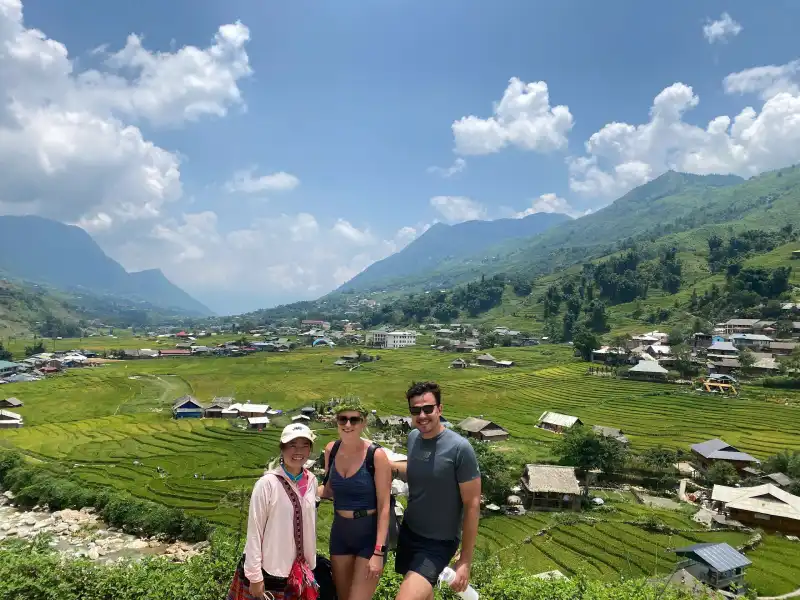
Sapa sits in the Hoang Lien Mountains of Lao Cai Province, near Vietnam's border with China. At roughly 1,500 metres above sea level, the town looks out over deep valleys, layered rice terraces, and villages where Black Hmong, Red Dao, Giay, and Tay families have farmed these slopes for generations.
Most visitors come for the views. The ones who stay longer — walking into Muong Hoa Valley, sharing a meal in a wooden homestay, or standing beneath the skyline of Fansipan — leave with a very different picture of northern Vietnam.
This guide is your planning hub — an overview that points to dedicated deep dives rather than repeating them. Use it to orient yourself, then follow the links that match your question:
- •When to go: Best Time to Visit Sapa
- •Getting there: How to Get from Hanoi to Sapa
- •Trip length: How Many Days Do You Need in Sapa
- •Budget: Sapa Budget & Daily Travel Costs
- •What to pack: What to Pack for Sapa
- •Choosing a trek: Which Sapa Trek Is Right for You
- •Private vs group: Private vs Group Tours in Sapa
- •Homestay reality: Homestay in Sapa — What to Expect
All tours referenced below are private experiences offered under the Sapa Local Guides brand and delivered through local English-speaking guides.
How to use this hub: Decide in order — when (Best Time to Visit Sapa), how many calendar days (How Many Days Do You Need in Sapa), which walking product fits (Which Sapa Trek Is Right for You or What Tour Should I Book in Sapa), then homestay vs hotel if overnight in the valley matters (Homestay vs Hotel in Sapa). Most first-visit mistakes come from reversing that order — booking a product name before counting walking days, or choosing a trek before checking wet-season mud and sleep after the Hanoi bus.
Why Visit Sapa
Sapa is one of the few places in Southeast Asia where dramatic mountain scenery and living ethnic culture sit side by side. You are not looking at rice terraces from a distance — on a good trekking day you walk through them, past water buffalo, wooden stilt houses, and families working the same fields their grandparents tended.
The town itself adds another layer. French colonial history survives in the stone church on the central square. Ethnic markets, mountain temples, and quiet viewpoints reveal a Sapa beyond the trekking posters — one you can explore on a slow Sapa Town Walking Tour or a Sapa Countryside Walking Tour through Suoi Ho and Ma Tra.
For travelers who want depth rather than a checklist, Sapa rewards slowing down: one focused experience — a full-day trek, a homestay night, or a textile workshop — often matters more than trying to see everything in a single afternoon.
Best Time to Visit Sapa
Season shapes everything — terrace colour, trail mud, summit visibility, homestay evenings, and crowd levels. There is no single wrong month, but priorities differ.
- •March–May: Clearer skies, comfortable trekking, green terraces — widely recommended for first visits
- •June–August: Wet season — lush emerald landscapes, slick paths, frequent cloud on Fansipan
- •September–November: Golden harvest, crisp air, busiest international window
- •December–February: Cold mist, atmospheric valleys, fewer tourists — pack warm layers
Month-by-month detail, rice crop phases, photography timing, and homestay seasonality live in the dedicated Best Time to Visit Sapa guide — including how conditions differ between Y Linh Ho, Lao Chai, Ta Van, and Giang Ta Chai.
Weather Overview
Sapa's mountain climate differs sharply from Hanoi. Even in summer, evenings cool quickly once the sun drops behind the Hoang Lien Mountains. Rain can arrive with little warning during wet season; mist may hide viewpoints without cancelling a village walk entirely.
- •Daytime spring/autumn: often 15–22°C — pleasant for walking
- •Summer: warm in town, cooler in the valley; rain gear essential June–August
- •Winter nights: can approach freezing at elevation — see What to Pack for Sapa
Check conditions before long treks. If weather or trail safety is a concern, Sapa Local Guides may propose a date change, an alternative route, or a refund for the portion of the service that cannot be safely provided.
Rice Terrace Seasons
The rice cycle determines what you photograph — and when Muong Hoa Valley looks golden versus green versus mirror-flat with planting water.
- •Planting (late spring): Flooded terraces reflect sky
- •Green season (June–August): Emerald slopes at their lushest
- •Golden season (late September–October): Classic harvest colour
- •Fallow (winter): Bare or brown terraces; mist and village life dominate
Full crop-calendar detail sits in Sapa Rice Terraces and Best Time to Visit Sapa. A Sapa trekking tour puts you inside the cycle rather than viewing it from a distance alone.
Main Trekking Areas
Muong Hoa Valley
The heart of Sapa trekking — a living river corridor connecting Y Linh Ho, Lao Chai, Ta Van, Giang Ta Chai, and hamlets beyond. Most one-day and two-day treks focus here. Read the full Muong Hoa Valley guide for village sequence, seasons, and responsible visiting — then compare routes in Which Sapa Trek Is Right for You.
Ban Ho and the lower valleys
South of the main tourist loop, Ban Ho sits beside the river in one of the greenest valleys — Tay village country with stilt houses and warmer low-valley climate. The 3-Day Sapa Valley & Village Trek continues through Ban Ho, Nam Toong, and Thanh Phu on its final day. Cultural context: Tay People guide. Place-specific detail: Ban Ho Village guide.
Remote ridges and the Hoang Lien region
The Remote Sapa Trekking Expedition pushes into higher, less-visited ridges — long mountain days and homestays far from town. Geography and elevation context: Hoang Lien Mountains guide.
Around Sapa Town — Suoi Ho and Ma Tra
The Sapa Countryside Walking Tour follows quiet paths from town through Sapa Lake, Suoi Ho, and Ma Tra — village contact without a full valley descent.
Fansipan
Vietnam's highest peak dominates the western skyline. Summit visits and cable car planning are separate from valley trekking — see the Fansipan guide.
Main Ethnic Communities
Sapa is home to several ethnic minority groups. Respectful travel starts with knowing who lives where — each group has a dedicated guide on this site.
Black H'mong
The largest presence in upper Muong Hoa — Lao Chai and Y Linh Ho. Indigo-dyed clothing and hemp textile traditions. Many Sapa Local Guides trekking guides are Black Hmong. Deep dive: Black Hmong People guide. Textile workshop: Sapa Indigo Heritage Experience.
Red Dao
Red headdresses and elaborate embroidery — Giang Ta Chai, Ta Phin, and remote ridge routes. Herbal baths feature on the Remote Sapa Trekking Expedition. Deep dive: Red Dao People guide.
Giay
Riverside Ta Van — bamboo groves, stilt houses, homestay hospitality. Several homestay products, including the Sapa Local Homestay Experience, are hosted by Giay families. Deep dive: Giay People guide.
Tay
Lower river valleys such as Ban Ho — stilt houses and greener, warmer landscapes on the 3-Day Sapa Valley & Village Trek. Deep dive: Tay People guide. Village guide: Ban Ho Village.
Always ask before photographing people, dress modestly when entering homes, and buy crafts directly from artisans when you can.
How to Get to Sapa
Sapa Local Guides tours start in Sapa Town. Transport from Hanoi to Sapa is your own arrangement — not included in tour prices.
Most travelers reach Sapa from Hanoi (~320 km) by overnight train to Lao Cai plus road transfer, direct sleeper bus, or private car. Plan to arrive the day before an early-morning trek — most full-day routes depart around 08:30 from Sapa Stone Church.
Full mode-by-mode comparison — travel times, approximate costs, and which option suits which traveller — lives in How to Get from Hanoi to Sapa.
Within Sapa
Tours meet at Sapa Stone Church on Fan Si Pan Road. Hotel pickup within Sapa Town is available for private tours only. Many treks include valley return transfers — for example, the Easy Muong Hoa Valley Trek includes a private car from Ta Van back to town.
How Many Days to Spend in Sapa
Trip length depends on fitness, weather buffer, and whether you want homestay nights — not on how many viewpoints you can name in one afternoon.
- •1 day: One focused trek or cultural walk — arrive the night before
- •2–3 nights: One full valley day plus buffer, or a two-day homestay trek
- •4+ nights: Multi-day treks, Fansipan half-day, photography flexibility
Calendar-day math matters: a "2-day trek with homestay" usually needs three nights in Sapa when you include arrival and departure. Budget and packing scale with nights — see Sapa Budget & Daily Travel Costs and What to Pack for Sapa.
Detailed frameworks for first-timers, families, and photographers: How Many Days Do You Need in Sapa. Hour-by-hour weekend structure: 2 Days in Sapa — Complete Itinerary. Three-day structure (trekking, homestay, Fansipan): 3 Days in Sapa — Complete Itinerary.
Choosing the Right Trekking Experience
Every Sapa Local Guides trek is private — exclusively for your party, with a minimum of two paying travellers. Six trekking products span one-day valley walks through three-day remote expeditions.
Rather than duplicating full route comparisons here, use the dedicated decision guide: **Which Sapa Trek Is Right for You** — distance, difficulty, elevation, homestay nights, village coverage, and traveller fit for all six routes.
Quick orientation:
- •First visit, one day: Easy Muong Hoa Valley Trek or Full-Day Muong Hoa Valley Trek
- •First homestay: 2-Day Trek & Local Homestay or Hidden Villages Trek
- •Broadest village sample: 3-Day Sapa Valley & Village Trek
- •Most demanding: Remote Sapa Trekking Expedition
Browse all routes at Sapa Trekking Tours or enquire via WhatsApp with your dates and fitness level.
Trade-offs worth deciding before you book: The Easy Muong Hoa Valley Trek is graded Moderate despite the name — about 10–12 km on village trails, not a town stroll. The car from Ta Van removes the worst uphill finish; it does not remove mud or hours on your feet.
The Full-Day Muong Hoa Valley Trek adds forest, waterfall, and Giang Ta Chai — choose it for extra distance, not because Easy sounds too soft. Multi-day products need walking days on the calendar, not product names — see How Many Days Do You Need in Sapa. None of the six catalogue treks summit Fansipan. Starting any valley trek the morning the sleeper bus arrives is how the wrong route feels "too hard" — sleep first. Detail: Sapa Trekking Safety, Easy Trek vs Full-Day Trek in Sapa.
Homestays vs Hotels
Both have a place in a Sapa itinerary — hotels offer comfort and recovery; homestays offer village immersion. Homestays are working family homes with simple bedding and shared facilities — not hotel replicas.
The honest expectations guide — rooms, food, etiquette, surprises, and who should choose which — lives at **Homestay in Sapa — What to Expect. Hotel versus family homestay as a trip decision: Homestay vs Hotel in Sapa. Compare standalone homestay products in Which Sapa Homestay Is Right for You**.
Product options range from the Sapa Local Homestay Experience in Giay Ta Van to the Hidden Village Homestay Journey in quieter hamlets. Many travelers combine hotel nights in town with one homestay night on a multi-day trek.
Responsible Travel in Sapa
Tourism has transformed Sapa over the past two decades. Thoughtful choices by visitors help ensure the valleys remain livable for the families who call them home.
- •Choose private, small-footprint tours rather than large groups that overwhelm village paths
- •Ask permission before photographing people — especially elders and children
- •Buy textiles and crafts directly from the artisan who made them
- •Dress modestly and remove shoes when entering traditional homes
- •Stay on marked trails during wet season to avoid damaging terrace walls
- •Carry cash in small notes for village purchases — card payment is rarely available in hamlets
Sapa Local Guides works directly with families it knows personally, pays fair rates for homestays and meals, and designs routes that spread visitors across quieter trails where possible. When a join-in day is still the better booking — and when it is not — read Private vs Group Tours in Sapa. For a longer reflection on private walking in this landscape, read Hidden Sapa Experiences.
Practical Travel Tips
Meeting point and start times
All tours start in front of Sapa Stone Church, on Fan Si Pan Road in the heart of Sapa Town. Your local guide waits by the church steps wearing a green hat with the Sapa Local Guides logo. Arrive five minutes before the scheduled start. Full-day treks typically begin around 8:30.
What to pack
Season-specific clothing, footwear, daypack gear, homestay items, and a departure checklist — see **What to Pack for Sapa**. Minimum essentials: sturdy trekking shoes, rain jacket, warm layers, refillable water bottle, cash in small notes, headlamp for homestays. Difficulty, rain, families, and when a guide is actually useful: Sapa Trekking Safety.
Money and payments
Planning ranges for accommodation, food, transport, trekking, and daily budgets — **Sapa Budget & Daily Travel Costs**. Tour prices on this site are quoted in euros; confirmed bookings pay via PayPal to Hanoi Travel Mate Co., Ltd. Personal expenses, tips, drinks not in the itinerary, and travel insurance are excluded.
Travel insurance
Travel insurance is not included in any tour price. Multi-day treks and remote expeditions especially warrant cover that includes hiking and emergency evacuation.
Food and culture
Mountain cuisine is hearty and seasonal — smoked meats, sticky rice, fresh vegetables, and home-pressed rice wine shared around the fire. For a window into Sapa's morning food culture, read Why Locals Eat Phở Early in the Morning in Sapa and consider pairing it with a Sapa Town Walking Tour.
Beyond trekking
Not every visitor needs a full-day hike. The Sapa Countryside Walking Tour (half day, from €28 per person) suits older travellers, families, and anyone who prefers a gentler pace. The Sapa Indigo Heritage Experience suits culture-focused visitors. Custom itineraries are available through Private Sapa Expeditions.
Frequently Asked Questions
Is Sapa worth visiting if I only have one day?
Yes — if you choose one experience and commit to it fully. A single full-day trek through Muong Hoa Valley or a half-day countryside walk gives you more than a rushed pass through town viewpoints. One day is not enough for a homestay trek, but it is enough for a meaningful introduction.
Do I need a guide, or can I trek independently?
Many valley paths are walkable without a guide, but a local guide transforms the experience. Routes are not always marked clearly, weather changes quickly, and the cultural context — which village is which, what you are seeing in the terraces, how to interact respectfully — is what most independent walkers miss. Honest independent-vs-guide criteria: Sapa Trekking Safety. All Sapa Local Guides experiences are private and guided.
Are tours really private?
Yes. Every experience is private — exclusively for your party. There is a minimum of two paying travellers at the published per-person price. Solo travellers are welcome to enquire; a solo booking is charged at the two-traveller minimum unless a separate quotation is agreed.
When is the best time for trekking?
March to May and September to November offer the clearest skies and most comfortable temperatures. Full month-by-month detail: Best Time to Visit Sapa.
How difficult is trekking in Sapa?
Routes range from moderate one-day valley walks to challenging three-day remote expeditions. The Easy Muong Hoa Valley Trek is rated moderate — a normal fitness level is enough. Tell the team your fitness honestly when you enquire and they will match the right trail.
What is included in the tour price?
Inclusions vary by product but generally cover an English-speaking local guide, planned village stops, and meals listed in the itinerary. Lunch with a local family is included on full-day treks. Transport to and from Sapa, travel insurance, personal expenses, and tips are not included. Check the specific product page for full details.
Can children join?
Children must travel with a parent or legal guardian. Standard trekking tours are not recommended for ages 0–5. Ages 6–11 may suit easy private walks and selected family experiences depending on ability. Multi-day treks and ages 12–17 require individual suitability confirmation. Contact the team to discuss your family situation.
What happens if it rains?
If weather or trail conditions create a safety concern, Hanoi Travel Mate Co., Ltd. may propose a free date change, a safer alternative route or experience, or a refund for the portion of the service that cannot be provided. The final operational safety decision is made by the designated Hanoi Travel Mate tour operator.
How do I book?
Message Sapa Local Guides on WhatsApp with your preferred date, tour, and group size. Sending an enquiry does not confirm the tour — the team normally responds within 12 hours to confirm availability and payment details. You can also visit the contact page for meeting point and policy details.
Where can I read more before I decide?
Planning guides
Best Time to Visit Sapa · How to Get from Hanoi to Sapa · How Many Days Do You Need in Sapa · Sapa Budget & Daily Travel Costs · What to Pack for Sapa · Which Sapa Trek Is Right for You · Homestay in Sapa — What to Expect
Season deep-dives
September & October Harvest Season in Sapa · Winter Trekking in Sapa · Wet Season & Fog Season in Sapa
Geography and communities
Muong Hoa Valley · Fansipan · Hoang Lien Mountains · Black Hmong People · Red Dao People · Giay People · Tay People
Village guides
Y Linh Ho Village · Lao Chai Village · Ta Van Village · Giang Ta Chai Village · Ta Phin Village · Ban Ho Village · Cat Cat Village · Cat Cat vs Muong Hoa Valley
Book experiences
Sapa Trekking Tours · Sapa Local Homestay Experience · All Sapa Experiences · Private Sapa Expeditions
Sapa is not a place you finish. It is a place you understand a little more deeply each time you walk into the valley — one village, one meal, one conversation at a time. When you are ready to plan, the team at Sapa Local Guides is here to help you choose the route that fits.
¿Quieres crear tu propia historia?
Únete a un trek u homestay en Sapa y vive la verdadera montaña.
Consultar por WhatsApp