Sapa Local Guides · Vietnam · August 2026
Muong Hoa Valley, Sapa — Villages, Rice Terraces & Trekking Guide
What Is Muong Hoa Valley?
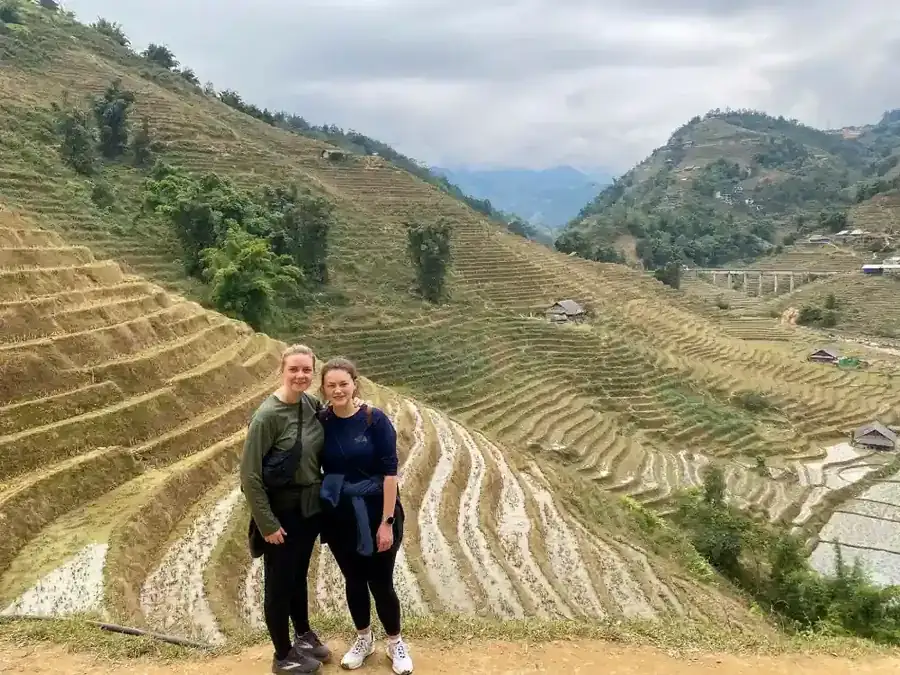
Muong Hoa Valley is the great river valley that drops eastward from Sapa Town into the Hoang Lien Mountains of Lao Cai Province, northern Vietnam. For most visitors, it is the landscape they picture when they think of Sapa: stacked rice terraces climbing both sides of a deep gorge, wooden houses perched on hillsides, water buffalo on muddy paths, and ethnic minority villages connected by foot trails that predate any road map.
The valley is not a single village or a fenced attraction. It is a living agricultural landscape — roughly 15 kilometres long — where Black Hmong, Giay, and Red Dao families farm, weave, raise children, and walk the same routes their parents and grandparents used. Tourism passes through, but daily life continues around it.
If you are planning a first visit to Sapa, understanding Muong Hoa Valley helps you choose where to walk, when to come, and how to visit respectfully. For broader trip planning — transport, seasons, homestays, and how many days to stay — see The Complete Sapa Travel Guide, How Many Days Do You Need in Sapa, What to Pack for Sapa, and Sapa Budget & Daily Travel Costs.
Location and Geography
Muong Hoa Valley lies immediately south and east of Sapa Town, descending from roughly 1,600 metres toward lower elevations as the Muong Hoa River winds toward Lao Cai Province. The valley sits within the Hoang Lien mountain range — the same massif that includes Fansipan, Vietnam's highest peak — and forms a natural corridor between high-altitude Sapa and the warmer lowlands below.
Geographically, the valley works like a giant amphitheatre. Steep forested ridges of the Hoang Lien Mountains frame both sides. Between them, the river has carved a floor where generations of farmers have sculpted rice terraces into slopes that look too steep to cultivate — yet every season, they fill with water, green shoots, or golden grain.
Trails along the valley wall switchback through bamboo, pine scrub, and open terrace edges. Weather moves quickly here: mist can rise from the river in minutes, sun can break through above Lao Chai while Ta Van remains in cloud, and rain in the wet season turns paths slick within an hour. That variability is part of what makes the valley feel alive rather than scenic but static.
Most trekking routes begin in or above Sapa Town and descend into the valley, walking village to village before a road or private transfer returns you uphill. Do not confuse this corridor with Cat Cat Village — a ticketed Black Hmong site on a different stream immediately below town, not inside Muong Hoa. Side-by-side: Cat Cat vs Muong Hoa Valley. The Sapa Countryside Walking Tour offers a gentler half-day approach from town through nearby hamlets without a full valley traverse — useful if you want context before committing to a full-day trek.
Why Muong Hoa Valley Is Famous
Muong Hoa Valley became internationally known for a simple reason: it concentrates everything people travel to Sapa to see into one continuous landscape.
The rice terraces here are among the most photographed in Southeast Asia. They appear in travel magazines, social feeds, and documentary footage not because they are the only terraces in Vietnam, but because they combine scale, accessibility, and human presence in a way few other valleys match. You can stand on a path above Lao Chai and watch farmers transplanting seedlings on the same slopes you photographed from a viewpoint minutes earlier.
The valley is also famous because it remains inhabited. Unlike purely scenic viewpoints where tourism replaced agriculture, Muong Hoa still functions as farmland and home. Markets, school paths, indigo-dyeing yards, and wood-fire kitchens sit beside trekking routes. That overlap — tourism and everyday life sharing the same trails — defines the Sapa experience for many travelers.
Finally, Muong Hoa is the default trekking corridor for Sapa. The majority of guided day hikes and multi-day homestay routes pass through at least one of its villages. If you book a Sapa trekking tour, there is a strong chance Muong Hoa Valley will be central to your route — though quieter alternatives exist for return visitors who want to avoid the busiest loops.
Rice Terraces of Muong Hoa Valley
The terraces of Muong Hoa are engineered over centuries, not decades. Families maintain stone and earthen embankments that hold water during planting, then drain gradually as rice matures. Because slopes vary, each terrace is slightly different in shape and size — no two curves are identical, which is part of why the valley photographs so well from above.
How the seasons change the valley
- •Planting season (late spring to early summer): terraces flood with water, creating mirror-like reflections of sky and cloud
- •Green season (June–August): young rice covers the slopes in vivid emerald — the wettest months, but often the lushest
- •Golden season (late September–October): fields turn gold before harvest, widely considered the most photogenic period
- •Fallow / winter (November–February): terraces may appear bare or brown; mist and village atmosphere dominate
Understanding this cycle helps set expectations. A visit in July rewards you with green intensity and dramatic cloud movement; a visit in October rewards golden light and clearer long views; a winter visit offers quiet trails and moody fog drifting between houses in Y Linh Ho and Lao Chai.
Terraces are not backdrops — they are livelihoods. Walking through them means staying on established paths, not cutting across planted fields, especially during planting and harvest when every square metre matters to the family farming it. Region-wide reference: Sapa Rice Terraces.
Villages Inside the Valley
Muong Hoa Valley contains a string of ethnic minority villages, each with distinct character, elevation, and community makeup. These four are the most commonly visited on trekking routes — and the most important to understand as named places rather than generic "hill tribe villages."
Y Linh Ho
Y Linh Ho is often the first Black Hmong village trekkers reach when descending from Sapa into the upper valley. It sits above the steepest terrace walls, surrounded by some of the most panoramic rice fields in the region. Houses are scattered along ridges rather than clustered in a single centre, which gives the village a spread-out, quiet feel compared with busier stops later in the day.
Y Linh Ho is a regular feature of the Easy Muong Hoa Valley Trek — a full-day private route designed for first-time visitors who want a structured introduction to valley walking without the longest distances.
Lao Chai
Lao Chai is one of the largest Black Hmong settlements in Muong Hoa Valley and a natural crossroads on many trekking routes. From paths above the village, layered terraces unfold toward the river in almost every direction. Water buffalo rest beside walls; children walk between houses and school paths; women carry hemp or indigo-dyed cloth between homes and fields.
Lao Chai appears on both the Easy Muong Hoa Valley Trek and the longer Full-Day Muong Hoa Valley Trek, which continues deeper toward Giang Ta Chai. It is also the opening section of multi-day journeys such as the 3-Day Sapa Valley & Village Trek.
Because Lao Chai sits on a popular loop, it sees more foot traffic than Y Linh Ho or remote hamlets further south. Arriving early in the day — as most private tours do — makes a noticeable difference in how crowded paths feel.
Ta Van
Ta Van marks a shift in the valley's cultural geography. While upper villages are predominantly Black Hmong, Ta Van is a Giay ethnic community — known for bamboo groves, riverside scenery, stilt-house architecture, and a slightly lower, greener atmosphere than the terraces above Lao Chai.
Ta Van is where many trekkers pause for lunch — sometimes at a local restaurant with terrace views, sometimes in a Giay family home on routes that include home-cooked meals. The village is also central to homestay experiences: the Sapa Local Homestay Experience is hosted by Giay families in this part of the valley.
The Easy Muong Hoa Valley Trek finishes in Ta Van, where a private car typically returns guests uphill to Sapa Town — a practical end point that avoids a long climb after a full day of walking.
Giang Ta Chai
Giang Ta Chai lies further down the valley and is associated with Red Dao communities, forested side trails, suspension bridges, and — on some routes — a hidden waterfall surrounded by dense mountain vegetation. The atmosphere here is often quieter than the Lao Chai–Ta Van corridor, with fewer day-trippers and a stronger sense of entering a more enclosed mountain landscape.
Giang Ta Chai features on the Full-Day Muong Hoa Valley Trek and on the second day of the 2-Day Trek & Local Homestay. Longer itineraries may continue beyond Giang Ta Chai toward Su Pan or eventually toward lower valleys such as Ban Ho on three-day routes — but Giang Ta Chai itself is the valley's best-known Red Dao anchor village.
Ethnic Communities of the Valley
Muong Hoa is shared by several ethnic groups, each with distinct language, dress, and customs. Respectful visiting starts with knowing who lives where.
Black Hmong
The Black Hmong are the most visible community in the upper and middle valley — Y Linh Ho, Lao Chai, and surrounding hamlets. Their name comes from indigo-dyed clothing that appears deep blue-black. Hemp weaving, indigo dyeing, and embroidery remain part of daily life, not only craft demonstrations for visitors.
Many Sapa Local Guides trekking guides are Black Hmong and grew up on these trails. Their knowledge — which path floods first in rain, which family welcomes guests, which terrace viewpoint clears after mist — is grounded in lived experience rather than memorised scripts.
Giay
The Giay people are most closely associated with Ta Van and the riverside sections of Muong Hoa Valley. Giay villages tend to sit lower, with bamboo, vegetable gardens, and stilt houses near the water. Hospitality traditions run deep: sharing tea, offering a meal, and explaining farming rhythms are normal parts of how Giay families interact with guests on homestay routes.
Red Dao
Red Dao communities appear further along valley and forest routes — notably around Giang Ta Chai and on longer treks that leave the main tourist loop. Red Dao women are known for distinctive red headdresses and elaborate embroidery. Herbal knowledge is also central to Red Dao culture; traditional herbal baths using mountain plants feature on remote multi-day routes such as the Remote Sapa Trekking Expedition, which connects higher Hoang Lien ridges to valley hamlets.
These three groups — Black Hmong, Giay, and Red Dao — overlap in the valley but do not merge into a single "hill tribe" identity. Each village has its own rhythms, and each deserves the same courtesy you would extend in any rural community: ask before photographing, buy crafts directly from makers, and accept that not every home is open to visitors.
Trekking Routes Through Muong Hoa Valley
Muong Hoa is the backbone of Sapa trekking. Routes differ in length, difficulty, and how deeply they penetrate the valley — but most share the same principle: descend from Sapa, walk village to village along terrace paths, then return by road or continue overnight in a homestay.
The following overview describes how treks relate to the valley without repeating full hour-by-hour itineraries (those live on each product page).
One-day valley treks
The Easy Muong Hoa Valley Trek (from €32 per person, minimum two guests) covers Y Linh Ho, Lao Chai, and Ta Van at a moderate pace suited to first-time visitors. The Full-Day Muong Hoa Valley Trek (from €45 per person) extends the same corridor through Giang Ta Chai with a longer walking distance and a home-cooked Giay family lunch in Ta Van.
Both are private tours with English-speaking local guides. Full-day treks typically start around 8:30 from Sapa Town.
Two-day treks with homestay nights
The 2-Day Trek & Local Homestay spends day one in the main valley and day two continuing toward Giang Ta Chai and Su Pan before returning to Sapa. The Hidden Villages Trek & Local Homestay deliberately avoids the most crowded Lao Chai–Ta Van loop while still operating in the broader Muong Hoa landscape — a useful option if you have already walked the classic route once.
Multi-day valley journeys
The 3-Day Sapa Valley & Village Trek begins in Muong Hoa — Lao Chai, Ta Van, Giang Ta Chai — before continuing south toward Ban Ho and other lower valleys. This is the broadest introduction to how Muong Hoa connects to the wider Sapa trekking network beyond a single-day loop.
For a full comparison of all six trekking products, see Which Sapa Trek Is Right for You or browse Sapa Trekking Tours by duration.
Best Seasons to Visit Muong Hoa Valley
There is no wrong season, but each month paints the valley differently.
March to May
Spring offers mild temperatures and relatively clear skies — widely considered one of the best windows for valley trekking. Terraces transition toward planting; trails are usually dry; views from ridges above Lao Chai tend to open more often than in deep winter.
June to August
Summer brings the greenest terraces and the most dramatic cloud movement through the gorge. It is also the wet season: paths can be muddy, especially on descent into Y Linh Ho, and a light waterproof jacket is essential. Trekking poles help on steeper sections after rain.
September to November
Late September through October is golden rice season — fields glow amber before harvest, and September to November often combines comfortable walking temperatures with clearer long views across the Hoang Lien Mountains. If photography is a primary goal, this is the window many local guides recommend.
November to February
Winter is cool, frequently misty, and quieter. Terraces may be fallow, but fog drifting between houses in Ta Van and wood smoke rising from kitchen fires create a different kind of beauty. Warm layers are essential, especially for early starts from Sapa Town.
Photography in Muong Hoa Valley
Muong Hoa is one of the most photographed landscapes in Vietnam — which creates both opportunity and responsibility.
Where light works best
Early morning often brings soft mist and low crowds on upper paths near Y Linh Ho and Lao Chai. Late afternoon can cast warm sidelight across terraces above Ta Van, especially in golden season. Midday sun is harsh on exposed ridges but can work well for river-level scenes in Giay bamboo groves.
What to photograph — and what to ask first
Terraces, mountain cloud, trail curves, and wide valley panoramas rarely require permission. People do. Always ask before photographing villagers — especially elders and children. A guide who speaks the local language makes these interactions smoother and more respectful.
Carry a wide-angle lens for terrace scale and a moderate telephoto for compressing layered fields against Hoang Lien ridges. Rain covers and dry bags matter in summer; cold-weather batteries drain faster in winter mornings.
Avoid drone flights without checking local regulations and community consent — noise and privacy concerns are real in villages where homes sit metres from trail edges. Season, villages, and which walking day to book: Sapa Photography Tours.
Visiting Muong Hoa Valley Responsibly
Tourism has grown faster than infrastructure in parts of Muong Hoa. Thoughtful behavior protects both the landscape and the communities who live in it.
- •Stay on established paths — cutting across planted terraces damages embankments that take years to repair
- •Ask permission before photographing people; accept gracefully if someone declines
- •Buy textiles and crafts directly from the artisan who made them
- •Dress modestly and remove shoes when entering traditional homes
- •Carry cash in small notes — card payment is rarely available in valley hamlets
- •Choose private, small-footprint tours rather than large groups that overwhelm narrow village paths
Sapa Local Guides designs routes to spread visitors across quieter trails where possible and works directly with families it knows personally for homestays and meals. Private tours — exclusively for your party, with a minimum of two paying travellers — are the model used across all valley treks listed on this site.
For a wider discussion of ethical travel in Sapa, see the responsible travel section of The Complete Sapa Travel Guide.
Practical Visitor Information
Getting to the valley
Muong Hoa Valley is reached on foot from Sapa Town. There is no single "visitor centre" — treks begin from a fixed meeting point in front of Sapa Stone Church on Fan Si Pan Road, where local guides meet guests before walking or transferring to a trailhead above the valley.
Transport to Sapa from Hanoi or elsewhere is arranged separately and is not included in tour prices. Plan to arrive the day before an early-morning trek.
Fitness and difficulty
Valley day treks are generally rated moderate: full days on village paths with gentle climbs and descents through terraces. A normal fitness level is enough for the Easy Muong Hoa Valley Trek; the Full-Day route adds distance and elevation. Tell your guide honestly about your fitness and any mobility concerns when booking.
What to bring
Sturdy shoes with grip, a waterproof layer, sun protection, water, a small daypack, and cash for village purchases. Homestay nights on two- and three-day routes require an overnight pack; your guide or booking confirmation will clarify what hosts provide.
Homestays in the valley
Overnight stays in Ta Van and surrounding hamlets are available through dedicated homestay products and as part of multi-day treks. These are real family homes — not hotel-style lodges. Expect shared meals, basic sleeping arrangements, and an early morning wake to mist over the terraces.
Frequently Asked Questions
Where is Muong Hoa Valley?
Muong Hoa Valley extends east and south from Sapa Town in Lao Cai Province, northern Vietnam, within the Hoang Lien Mountains near the border with China. It is roughly 15 kilometres long and contains a chain of ethnic minority villages connected by foot trails and terrace paths.
Which villages should I know before I trek?
Y Linh Ho (upper Black Hmong terraces), Lao Chai (large Black Hmong crossroads), Ta Van (Giay riverside community), and Giang Ta Chai (Red Dao forest village) are the four names most often encountered on trekking routes. Knowing them helps you understand cultural shifts as you walk downhill through the valley.
Can I visit Muong Hoa Valley without a guide?
Some paths are walkable independently, but routes are not always clearly marked, weather changes quickly, and cultural context matters. All experiences offered by Sapa Local Guides are private and guided. A local guide who grew up in these mountains adds safety, navigation, and meaningful village interaction.
How long do I need in Muong Hoa Valley?
A full day covers the classic Y Linh Ho–Lao Chai–Ta Van corridor. Two days allow a homestay night and deeper continuation toward Giang Ta Chai. Three or more days connect Muong Hoa to lower valleys and quieter hamlets beyond the main loop.
When is the best time for photography?
Late September through October (golden rice) and March through May (clearer skies) are the most popular windows. Green season (June–August) rewards lush colour if you accept occasional rain and mist — Wet Season & Fog Season in Sapa. Harvest detail: September & October Harvest Season in Sapa.
Is the valley crowded?
The Lao Chai–Ta Van section of the main loop sees the most day-trippers, especially late morning. Private tours that start early and routes such as the Hidden Villages Trek deliberately reduce overlap with the busiest paths.
How do I book a trek through Muong Hoa Valley?
Browse Sapa Trekking Tours for route options by duration, then message Sapa Local Guides on WhatsApp with your dates and group size. Every trek is private; minimum two paying travellers at published per-person prices unless a solo quotation is agreed.
Muong Hoa Valley is not a place you summarise in a single photograph — though millions try. It is a corridor of living agriculture, shared trails, and communities who have shaped these mountains long before Sapa became a global trekking name. Walk it slowly, learn the village names, and let the valley reveal itself one terrace at a time.
Compare bookable routes: Muong Hoa Valley tours.
June–July green terraces? Explore our Book Sapa green season trek.
Ready to book?
Ready to book? Explore our Book Muong Hoa valley trek.
¿Quieres crear tu propia historia?
Únete a un trek u homestay en Sapa y vive la verdadera montaña.
Consultar por WhatsApp