Sapa Local Guides · Vietnam · August 2026
Homestay vs Hotel in Sapa — Which Is Right for Your Trip?
Executive Summary
A Sapa hotel is a town room: ensuite, hot water, a door that closes, restaurants downstairs. A Sapa family homestay is a night in a working household in the valley — mattresses, shared bathroom, household meals, roosters. They are not the same product with different branding.
Choose a hotel if you need sleep quality, ensuite bathrooms, Wi-Fi, recovery after the Hanoi bus, young children, mobility limits, or one tight night. That is the right answer for many first visits. It is not a lesser Sapa.
Choose a homestay if you want village rhythm more than comfort — and you have already read Homestay in Sapa — What to Expect. On this site the primary walk-in overnight is the Sapa Local Homestay Experience (trek in, night with a host family, different trail out). The secondary, lower-walking option is the Sapa Family Homestay Experience (vehicle to Ta Van, Giay household, optional short walks). Compare those products in Which Sapa Homestay Is Right for You.
Most trips should combine both: hotel on arrival and departure; one homestay night in the middle if energy and temperament match. This page does not name or sell town hotels. Sapa Local Guides does not operate hotels.
Buildings labelled “homestay” on booking sites are often guesthouses. This comparison is family homestay vs town hotel, not lodge vs lodge.
Quick Comparison Table
| | Town hotel | Family homestay | |--|------------|-----------------| | Where | Sapa Town (~1,500 m) | Valley hamlet (e.g. Ta Van area, or a walk-in village) | | Sleep | Private room, mattress standards vary by price | Platform mattresses; private room on request, not guaranteed | | Bathroom | Usually ensuite hot shower | Shared or outbuilding; hot water limited or a bucket | | Food | Choose restaurants; street phở | Household cooking, included on product nights | | Privacy | A lockable room | Your private group in a family home | | Wi-Fi / work | Usually usable | Do not count on it | | Noise | Town traffic, weekend bars | Roosters, dogs, kitchen, thin walls | | Access to treks | Walk or short ride to Stone Church ~08:30 | Already in the valley; walk out next day on Local Homestay | | Culture | Town, market, optional day trek | Meals, fire, village morning | | Best for | Recovery, families with small children, luxury, one night | Curious adults, school-age kids who accept simple beds | | Typical cash (planning) | Hostel ~$8–18; mid-range ~$25–55/night | Product bundle (guide + meals + night) — not a $30 room |
Ranges change. Budget detail: Sapa Budget & Daily Travel Costs.
Comfort
Hotel wins on predictable comfort: a door, a mattress you can describe in advance, climate control in many mid-range rooms, a shower that is a shower.
Homestay wins on atmosphere: fire, mist in the morning, the sound of the valley. It loses on thermostats. December–February nights in unheated wooden houses are cold. Wet-season damp feels colder than the number.
If comfort is the question, the answer is hotel. Do not book a homestay hoping it is a boutique with better views.
Privacy
Hotel: a room. Other guests in the corridor. Town is not secluded.
Homestay products here are private groups (your party and your guide, minimum two paying guests) — not a mixed backpacker dorm. Inside the house you still share space with the family. Sleeping may be a shared platform within your group. Thin partitions. You will hear the household.
If “privacy” means ensuite and silence, hotel. If it means not sharing a bus with strangers, homestay products already do that.
Authenticity
“Authentic accommodation Sapa” is a search phrase that causes bad bookings.
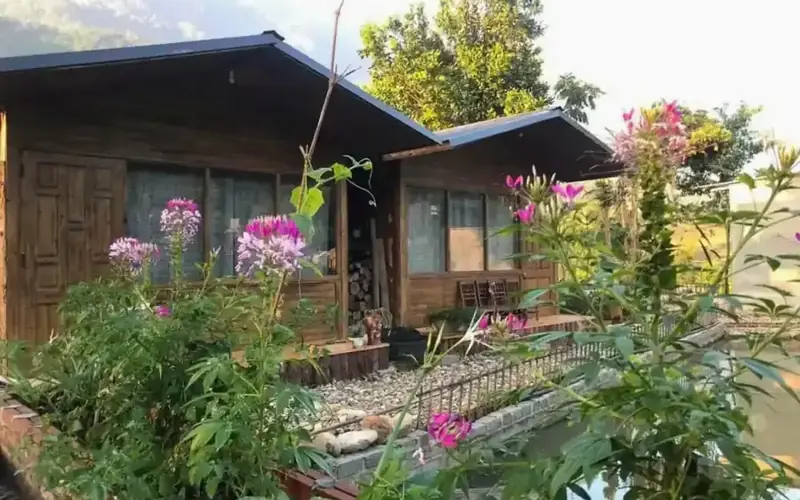
A family homestay is authentic as a working home that hosts you. Pigs stay in the yard. Children go to school. Dinner is what the family cooks. That is the point.
A town hotel is authentic as a hill-station town. Stone church, market, phở stools. It is not fake Sapa. It is a different layer of the same place.
A lodge with “homestay” in the name, many rooms, and English menus is a guesthouse. Enjoyable if that is what you booked. Unfair to review as a family night.
Authenticity is not a reason to suffer a bathroom you will resent. Match the building to the night you want.
Food
Hotel / town: you choose. Street breakfasts are often $1.50–3. Rice houses $4–10. View restaurants cost more. Quality varies; busy local rooms beat empty terraces.
Homestay: home cooking — rice, garden greens, tofu or pork, soup, optional rice wine. Dinner when it is ready, not when a menu says 19:00. Vegetarian usually possible with notice. Allergies need the guide; small kitchens cross-contaminate.
Homestay food is included on the product night. Comparing it to a $30 hotel room without meals is the wrong spreadsheet. If you need to control every ingredient, hotel plus restaurants.
Bathrooms
This is where most “is a Sapa homestay worth it?” answers split.
Hotel: ensuite, hot shower, sit-down toilet in most mid-range rooms. Confirm heating in winter.
Family homestay: often squat toilet, cold or bucket-heated water, wet floors, flip-flops, torch for an outbuilding path. Private rooms with better bathrooms exist on request, not as the default.
If bathrooms decide the trip, hotel. Family Homestay is still a village bathroom, even with a vehicle transfer. Local Homestay adds a trekking day on tired legs before that bathroom.
Families
Hotel nights in town are the default for families with young children. Cribs, sterile bathrooms, and predictable sleep are hotel problems to solve, not homestay ones.
Family Homestay is the family-shaped village product: short optional walks, cooking, weaving — still not ideal ages 0–5. School-age children who accept roosters and platform beds can do well. Local Homestay adds a real walk in and out — only if the children already hike.
Product mapping by age: Sapa Family Tours. Days: How Many Days Do You Need in Sapa.
Couples
Couples who want a lockable room and a restaurant evening: hotel.
Couples who want a shared kitchen fire and can share a platform or a requested private room: homestay. Local Homestay if you want the walk to be part of the night. Family Homestay if you want the house without the trek.
Minimum two paying guests already fits a couple. A homestay is not automatically more romantic. Cold, squat toilets, and thin walls are also a couple’s night.
Solo Travellers
Catalogue homestay and trek products require two paying guests. A solo traveller typically pays that minimum or pairs with another booking. That is product math, not a safety ranking.
Hotel is simpler for a solo night in town: book a room, walk to phở, day-trek if you want.
Independent village overnight without a hosting arrangement is not recommended. Town hotel plus a day walk is the honest solo default.
Older Travellers
Regular walkers: hotel as a base, Easy Trek by day, homestay only if bathrooms are a deliberate choice.
Prefer shorter days and sit-down toilets: hotel. Family Homestay is the gentlest overnight in the catalogue and is still not a hotel bathroom. Local Homestay is a walking day plus a simple night — often too much if knees and sleep quality are the constraint.
Limited mobility: valley paths and stilt houses are not step-free. Town hotel is the honest core.
Children
Under ~6: hotel. Homestay platforms, farm noise, and basic toilets hit small children harder than adults.
School-age who hike: hotel around a valley day, or Family Homestay if the point is the household, or Local Homestay if they can walk in and out.
Do not use a homestay to “save a hotel night” with a toddler. You will pay in sleep.
Luxury Expectations
If you want linen service, spa, valley-view glass, and room service, book a town hotel or resort in that category. This site does not sell those rooms and does not pretend a family homestay is luxury with a better story.
Red Dao herbal baths on some remote trek nights are household tradition, not a spa package.
Luxury and family homestay are different trips. Mixing the words causes the worst reviews.
Budget
Hotel: you pay the room; food is extra. Hostel ~$8–18; mid-range ensuite ~$25–55 (October weekends higher). Confirm live rates.
Homestay product: you pay a bundle — guide, meals, village night, walking or transfer as listed. Family Homestay last published from €69 per person (minimum two guests) — confirm the live page. Local Homestay: confirm the live hub; it is a two-day walking-plus-night product, not a cheap bed.
A €69 homestay night is not more expensive than a $30 hotel until you add a guide, lunch, dinner, breakfast, and transport into the valley. It can still be the wrong purchase if you wanted a hot shower.
Hanoi–Sapa transport is separate. Detail: Sapa Budget & Daily Travel Costs.
Location
Hotels: Sapa Town — church, market, restaurants, trek meeting point, Cat Cat as a leftover afternoon. Terraces at Lao Chai scale are not outside the lobby. Muong Hoa Valley is a descent.
Family Homestay: Giay country near Ta Van — vehicle in. Riverside, bamboo, stilt houses. Daytime trekker traffic on paths; quieter after groups leave.
Local Homestay: hamlet reached on foot through terraces; host ethnicity flexible. Not a restaurant-strip drop-off.
If “where should I stay in Sapa?” means walk to dinner, the answer is town hotel. If it means wake in the valley, the answer is a homestay night — with a hotel still useful on the nights before and after.
Trekking Access
Hotel in town: best for Easy Trek, Full-Day, countryside, and Cat Cat. Meet ~08:30 at the stone church. Sleep, shower, leave on the night bus.
Local Homestay: the trek is the access. You walk in on day one and out on a different trail day two. You do not need a separate valley day unless you want two walking identities.
Family Homestay: transfer, not a Muong Hoa trekking day. Pair with a hotel + Easy Trek on another calendar day if you want both terraces and a household night — count the days. 2 Days in Sapa, 3 Days in Sapa.
A 2-day trekking homestay product is still walking days, not a hotel substitute. Route list: Which Sapa Trek Is Right for You.
Cultural Immersion
Hotel plus a day trek still puts you on village paths with a guide. You return to town for dinner. That is real contact; it is not a household night.
Family Homestay maximises time in one Giay kitchen with little trail fatigue.
Local Homestay adds the walk as part of arriving — often the stronger “I stayed in the mountains” memory for people who can walk it.
Immersion is not a moral score. A hotel guest who asks permission before photos is more respectful than a homestay guest who treats the kitchen as a set.
Common Misconceptions
- •Homestay means boutique ethnic hotel.
- •Hotel means you will not see the real Sapa.
- •The cheapest bed is the authentic one.
- •Family Homestay has hotel bathrooms because you arrive by car.
- •Local Homestay is a hotel in the valley.
- •One night total in Sapa is enough for a homestay.
- •“Homestay” on a booking app is a family.
- •You should skip the hotel to save money, then trek at 06:00 off the sleeper.
- •Luxury and homestay can be the same night.
- •Children will sleep through roosters because the trip is special.
Who Should Choose Which
Hotel: arrival night; departure night; under ~6; mobility or ensuite needs; must work online; luxury brief; dislike farm noise; only one night; recovering from the bus.
Family Homestay: village night without a trekking day; school-age children who accept simple beds; older travellers who want the house more than the kilometres; couples who want Giay hospitality and a vehicle in.
Local Homestay: fit adults (and hiking teens) who want walk-in, a family night, and a different trail out — primary product when homestay and walking are the point.
Both: the usual good trip. Hotel bookends, one homestay in the middle. Pillar: The Complete Sapa Travel Guide.
If you are still unsure after this page, book the hotel. You can add a homestay when you know you want the household, not when you hope the bathroom will surprise you pleasantly.
First-Time Decision Shortcuts
For a first visit, separate the arrival night from the immersion night. A hotel protects sleep after Hanoi transport and keeps the next morning simple. A homestay makes more sense after you understand how much walking, cold, shared space, and village timing your group actually enjoys.
After a trekking day, a hotel is the safer recovery choice when clean-up, privacy, or a predictable mattress determines whether anyone can walk tomorrow. A homestay is the better recovery choice only when the household atmosphere is itself the reason for the night and the group accepts that comfort will remain basic.
Families and older travellers should decide in this order: walking ability, bathroom tolerance, sleep needs, then cultural interest. Choosing the homestay first and hoping the facilities will work reverses the decision. For couples and first-time visitors, one hotel bookend plus one deliberately chosen homestay night usually gives clearer expectations than moving every night.
Frequently Asked Questions
Should I stay in a homestay in Sapa?
Yes if you want a working family night and accept simple bathrooms. No if you need ensuite, quiet sleep, or you have one depleted night after the bus. Many people should hotel.
Is a Sapa homestay worth it?
Worth it as culture and place. Not worth it as a cheaper hotel. Read the expectations guide before you pay for a bundle you will judge as a room.
Homestay vs hotel in Sapa — which is better?
Neither. Hotel for comfort and town logistics. Homestay for household immersion. Combine them if you have the nights.
What is the best accommodation in Sapa?
The one that matches the night: town ensuite vs valley family home. This page does not rank hotels by name.
Hotel or homestay in Sapa for a first visit?
Hotel first night. Add Family Homestay or Local Homestay only if a second night exists and bathrooms are acceptable. Do not make the sleeper-bus arrival a homestay dawn.
Where should I stay in Sapa?
Town if you want restaurants and trek departures. Valley homestay if you want to sleep in the agricultural landscape. Terraces are not at the hotel door.
Is the Family Homestay a hotel?
No. Vehicle transfer, still a Giay working home. Lowest walking demand of the standalone products. Still not ensuite luxury.
Do I have to trek to do the Local Homestay?
Yes in the sense of walking in and out on village trails. If you do not want that, book Family Homestay or a hotel plus a day trek.
Can solo travellers book a homestay?
Products need two paying guests. Solo hotel nights are straightforward. Do not walk into a village asking for a bed.
Are homestays authentic?
Family ones, yes, as homes. Lodge “homestays” are guesthouses. Authenticity is not a substitute for a toilet you can use.
How much more does a homestay cost than a hotel?
Wrong comparison if you ignore meals and the guide. Mid-range town rooms are often $25–55. Homestay products are two-day bundles; confirm live prices.
Can I do both on one trip?
Yes — that is the usual recommendation. Hotel on the travel nights; one homestay when you are rested.
## Ready to book?
Ready to book? Explore our Book Sapa family homestay tour.
¿Quieres crear tu propia historia?
Únete a un trek u homestay en Sapa y vive la verdadera montaña.
Consultar por WhatsApp