Sapa Local Guides · Vietnam · August 2026
Red Dao People of Sapa — Culture, Villages, Embroidery & Herbal Traditions
Who Are the Red Dao People?
The Red Dao — Dao Đỏ in Vietnamese — are one of the ethnic minority groups living in the mountains around Sapa, Lao Cai Province, in northwest Vietnam. They belong to the broader Dao (Yao) language family, whose communities extend across northern Vietnam, southern China, and neighbouring highland regions. In Sapa, Red Dao families are among the most visible and culturally distinctive groups travellers encounter on trekking routes, at markets, and during homestay stays.
Red Dao identity is expressed through clothing, embroidery, herbal knowledge, agricultural practice, and spiritual beliefs tied to the landscape of the Hoang Lien Mountains. Women are often recognisable by red or embroidered headscarves, layered indigo clothing, and elaborate stitched panels on jackets and trousers. Men traditionally wear simpler indigo garments and may carry long pipes or woven bags on mountain paths.
The Red Dao are not a monolithic group. Subgroups and village lineages differ in dialect, costume detail, and settlement history. What they share is deep attachment to specific valleys and ridges — farming rice terraces, gathering forest herbs, weaving textiles, and maintaining oral traditions passed between generations on the slopes below Fansipan and across the wider Sapa region.
For travellers, understanding who the Red Dao are transforms a trek from scenery to context. The terraces, wooden houses, and market stalls you pass are not backdrop — they are the material culture of communities who have lived in these mountains long before Sapa became a tourism destination.
For broader trip planning — seasons, transport, homestays, budget, and how ethnic groups fit into the Sapa landscape — see The Complete Sapa Travel Guide, Homestay in Sapa — What to Expect, and Sapa Budget & Daily Travel Costs.
History and Origins
Dao-speaking peoples have inhabited the highlands of southern China and northern Vietnam for centuries, with migration and settlement patterns shaped by land pressure, political change, and access to fertile valley slopes. Oral histories among Red Dao communities in Sapa often describe ancestral journeys from higher plateaus into the terraced valleys of Lao Cai Province — movement driven by farming opportunity, intermarriage, and the search for secure watershed land.
French colonial administrators documented ethnic minority groups in the Sapa region in the early twentieth century, categorising communities by language, clothing, and settlement location. Red Dao villages appeared on early maps as distinct from Black Hmong, Giay, and Tay settlements — often on forested mid-slopes or side valleys rather than the busiest terrace corridors.
The twentieth century brought profound change. Fixed national borders, new roads, schooling in Vietnamese, and the growth of tourism altered daily life without erasing cultural practice. Embroidery remains a living art. Herbal knowledge still passes from elders to younger family members. Festivals adapt to calendar constraints while retaining symbolic meaning.
Today, Red Dao families participate actively in Sapa's tourism economy — as guides, homestay hosts, textile sellers, and herbal bath providers — while continuing to farm, raise livestock, and manage forest resources. That dual reality defines contemporary Red Dao life: tradition and adaptation operating simultaneously on the same mountain paths.
Where Red Dao Communities Live
Red Dao settlements spread across the Hoang Lien massif and neighbouring valleys — not concentrated in a single village but distributed across elevation bands where terrace agriculture, forest access, and water supply align.
Ta Phin
Ta Phin lies northeast of Sapa Town — one of the most accessible Red Dao villages for day visitors. A road connects the town to Ta Phin commune, where Red Dao and Hmong communities live among karst hills, cardamom plots, and secondary forest. Ta Phin is widely associated with commercial herbal bath services aimed at tourists, and with textile stalls selling embroidered goods. It receives significant day-trip traffic compared with more remote hamlets. Place-specific detail: Ta Phin Village guide.
Nam Cang and remote valleys
Nam Cang represents the quieter end of the Red Dao settlement spectrum — a remote valley hamlet reached on foot through forest and terrace country, far from Sapa's central market noise. Multi-day trekking routes that leave the main Muong Hoa Valley tourist loop sometimes connect to Red Dao communities in similarly isolated locations: small clusters of wooden houses, shared irrigation channels, and footpaths linking neighbours across ridges.
Other Red Dao villages appear on established trekking corridors — Giang Ta Chai in Muong Hoa, Nam Toong on routes continuing toward Ban Ho, and hamlets visited during the second day of the Remote Sapa Trekking Expedition, where a traditional herbal bath may conclude a long ridge walk.
Geography matters. Red Dao villages on eastern Hoang Lien flanks often look toward Sapa Town and the Muong Hoa corridor. Settlements on western or northern approaches face Lai Chau Province and higher forest zones. Elevation affects crops, costume weight, and how often families interact with town markets.
Traditional Houses
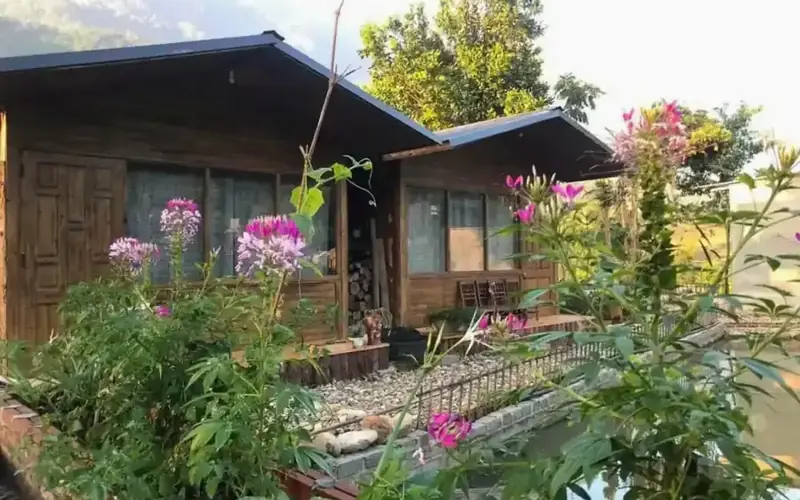
Red Dao homes in the Sapa region are typically wooden structures built on hillsides — post-and-beam frames with corrugated metal or tile roofs replacing older thatch on many buildings. Floor plans vary by wealth, family size, and village custom, but several features recur.
Living space often centres on a main room with a cooking fire — the social heart of the home where meals are prepared, guests received, and winter warmth generated. Sleeping areas may be partitioned or located on upper levels in larger houses. Livestock — pigs, chickens, sometimes cattle — occupy ground-level pens or nearby sheds, close enough for care but separated from food preparation.
Homestay rooms for travellers are usually simple: mattresses on wooden platforms, blankets, mosquito nets in warmer months, and shared bathroom facilities. Authentic homestays are working homes, not hotel replicas — a distinction that matters for respectful expectations. Sapa Local Guides homestay experiences, including the Sapa Local Homestay, place guests with Hmong, Red Dao, Tay, or Giay families under arrangements negotiated directly with households rather than through anonymous intermediaries.
Construction materials reflect local ecology: timber from managed forest plots, stone foundations on steep sites, bamboo for temporary structures and fencing. Houses orient toward valley views and afternoon sun where terrain allows — practical choices refined over generations on unstable slopes.
Clothing and Embroidery
Red Dao clothing is among the most visually distinctive textile traditions in the Sapa region — and among the most labour-intensive. Women's festival and formal dress can include embroidered jackets, trousers, belts, and headdresses carrying geometric patterns, fertility symbols, and narrative motifs whose meanings are taught within families rather than published in guidebooks.
Embroidery as cultural archive
Embroidery is not decoration alone. Patterns encode clan identity, marital status, regional subgroup affiliation, and protective symbolism. Young girls historically learned stitches from mothers and grandmothers, producing garments over months or years for marriage, New Year celebrations, and funeral rites. Commercial tourism has created a parallel market — simplified designs sold to visitors at markets and village stalls — but household production for ceremonial use continues in many families.
Indigo dye remains central. Red Dao textiles often combine deep blue indigo grounds with red, yellow, and white thread work. Dyeing is slow, seasonal work — fermenting indigo paste, dipping cloth repeatedly to achieve dark tones, sun-drying between immersions.
What travellers notice on the trail
On trekking routes, you may see women embroidering on porches, wearing daily work clothes simpler than festival dress. Red headscarves or wrapped headdresses are common identifiers. Asking before photographing embroidery work or ceremonial clothing is essential — these items carry personal and spiritual weight beyond their visual appeal.
Markets in Sapa Town include Red Dao vendors selling handmade textiles. Buying directly from makers supports household income more reliably than purchasing from resellers who did not produce the work.
Herbal Medicine and Red Dao Herbal Baths
Red Dao communities hold extensive knowledge of medicinal plants growing in the forests of the Hoang Lien Mountains — roots, bark, leaves, and fungi collected according to season, habitat, and traditional preparation methods. This knowledge supports household healthcare in villages where clinic access requires travel to town, and it feeds into the famous herbal bath tradition associated with Red Dao culture in Sapa.
How herbal baths work
Traditional herbal baths involve steeping bundles of dried and fresh plants in large wooden tubs of hot water — sometimes for hours before use. Families collect specific species from forest margins and cultivation plots, combining them in recipes guarded within lineages. Baths are used for relaxation, post-labour recovery, postpartum care, and general wellness in cold mountain climates.
Tourism has commercialised the practice — bath houses in Ta Phin and Sapa Town offer spa-style experiences using Red Dao herbal branding. Village homestay baths on remote trekking routes remain closer to household tradition: simpler facilities, recipes prepared by the hosting family, and a social context of shared evening routine rather than appointment scheduling.
The Remote Sapa Trekking Expedition includes a traditional Red Dao herbal bath on its second night — one of the most direct ways Sapa Local Guides guests experience the practice in a village setting rather than a commercial spa.
Respect and representation
Herbal knowledge is intellectual property of communities — not a generic wellness prop. Avoid treating baths as photo opportunities without permission, and question operators who exploit Red Dao cultural branding without employing or compensating Red Dao families.
Farming and Daily Life
Red Dao daily life revolves around agricultural labour on rice terraces and secondary crops — corn, vegetables, soybeans, and cardamom in some areas — combined with livestock management and forest gathering. Days begin early; terrace work follows monsoon rhythms that govern planting, weeding, and harvest across the Muong Hoa Valley and neighbouring watersheds.
Rice terraces
Terrace farming defines the visible landscape of Red Dao settlement zones. Families maintain embankments, manage water allocation through shared channels, and transplant seedlings in wet season months when slopes turn mirror-bright with flooded paddies. Harvest in autumn brings communal effort — cutting, threshing, drying grain on wooden racks near houses.
Terraces require constant repair. Landslides, buffalo damage, and erosion from heavy rain destroy embankments that take days to rebuild. Tourism income supplements but rarely replaces farming as the economic base for most Red Dao households in the Sapa region.
Beyond the fields
Daily life includes firewood collection, animal feeding, textile work, childcare, and market trips to Sapa Town — often on foot or motorbike along mountain roads. Younger family members may work as trekking guides or homestay hosts while elders maintain fields. Migration for factory or urban work affects some villages, sending remittances home while reducing labour available for terrace upkeep.
Understanding this rhythm helps travellers interpret what they see on trail: a woman carrying firewood is not a staged scene; a child herding buffalo is daily responsibility; an empty terrace in winter reflects crop cycle, not abandonment.
Festivals and Beliefs
Red Dao spiritual life combines ancestor veneration, spirit appeasement, and calendar festivals tied to agricultural cycles. Practices vary between villages, and outsiders are not always welcome at ceremonial events — privacy should be assumed unless a host family explicitly invites observation.
Major festival themes
New Year celebrations — aligned with lunar calendar traditions shared across Dao and Hmong communities in the region — involve special foods, ceremonial dress, ancestor offerings, and village visiting. Weddings are multi-day affairs requiring embroidered garments, ritual specialists, and negotiated exchanges between families. Funerals involve extended mourning protocols and spiritual guidance to accompany the deceased.
Spirit beliefs attach to natural features — rocks, ancient trees, water sources — and to household altars where ancestors receive offerings. Disrespect at sacred sites, loud behaviour at ceremonies, or intrusive photography during rituals cause genuine offence.
Travellers rarely schedule visits around Red Dao festivals unless arranging homestays through operators with village relationships. If you are fortunate enough to witness preparation for a ceremony, observe quietly and follow your host's guidance without demanding access.
Responsible Tourism
Tourism has brought income and visibility to Red Dao communities — and pressure: cultural simplification for market stalls, overcrowding in accessible villages like Ta Phin, uneven distribution of benefit toward households actually hosting guests, and children encouraged to sell bracelets on trails instead of attending school.
Responsible tourism practices that support Red Dao communities:
- •Choose private, small-group operators that employ local guides and pay homestay families directly
- •Buy textiles and crafts from makers when possible, accepting fair prices rather than aggressive bargaining
- •Ask permission before photographing people — especially children and ceremonial dress
- •Do not enter homes uninvited or treat village paths as theme-park corridors
- •Carry out all litter; do not give candy or money to children on trails
- •Respect declines when invited to bathe, eat, or photograph — hospitality has limits
Sapa Local Guides operates with a minimum of two paying travellers, working through personal relationships with Hmong, Red Dao, Tay, and Giay families. That model limits group size and channels revenue toward specific households rather than anonymous tour pools.
Custom cultural itineraries — including extended homestays or multi-village routes — can be arranged through Private Sapa Expeditions when standard product routes do not match your interests.
Visiting Red Dao Villages Respectfully
Practical respect converts ethical intention into behaviour on the ground.
Before you arrive
Read context before walking. The Muong Hoa Valley guide explains how Giang Ta Chai and other villages fit into trekking corridors. The Hoang Lien Mountains guide explains elevation, weather, and geographic relationships. Knowing where you are — and who lives there — prevents treating villages as interchangeable photo stops.
On the trail
Walk at village pace, not gym pace, when passing houses and school paths. Greet adults with a nod or brief hello; learn a few words of Vietnamese or local greeting if your guide teaches them. Stay on established paths — terrace walls and irrigation channels damage easily under careless footsteps.
If invited for tea or a meal, accept graciously or decline politely — both are fine. Remove shoes when entering homes if others do. Ask where toilet facilities are rather than assuming open-field practice is acceptable near water sources.
Homestay etiquette
Homestays with Red Dao families — available on multi-day treks and through dedicated homestay products — require flexibility. Meals arrive when ready; sleeping arrangements are shared and simple; hot water may be limited. Your guide interprets household customs and translates conversation. Engage with curiosity rather than comparison — avoid framing mountain life as "primitive" or "quaint."
Photography during homestays should be discussed with your guide and host family before raising a camera at dinner or during private family moments.
What Sapa Local Guides offers
Sapa Local Guides does not operate Ta Phin day-trip shuttle tourism or commercial spa packages. Our Red Dao cultural contact happens through trekking and homestay routes — valley walks, remote ridge expeditions, and overnight stays including the Sapa Local Homestay, where Red Dao families may host depending on availability and route design.
Frequently Asked Questions
How many Red Dao people live around Sapa?
Precise population figures change between censuses and depend on administrative boundaries. Red Dao communities are distributed across multiple communes in Lao Cai Province — Ta Phin, Ban Ho, and remoter valleys — rather than concentrated in a single town. What matters for travellers is that Red Dao presence is substantial and visible across many trekking routes, not limited to one village.
How are Red Dao different from Black Hmong?
Both are ethnic minority groups in the Sapa region with distinct languages, clothing traditions, and settlement histories. Black Hmong women are known for indigo hemp clothing and large silver earrings; Red Dao women are known for red headdresses and elaborate embroidered jackets. Hmong and Red Dao villages sometimes neighbour each other on the same valley slopes but maintain separate cultural identities.
What is Ta Phin known for?
Ta Phin is a Red Dao and Hmong village area northeast of Sapa Town, known for karst scenery, textile sales, and commercial herbal bath services popular with day visitors. It is more accessible and more tourism-developed than remote hamlets such as Nam Cang. Read the Ta Phin Village guide for walking routes, homestays, and responsible visiting.
What is Nam Cang?
Nam Cang is a remote Red Dao valley village reached on foot through mountain trails — representative of quieter settlements where tourism traffic is lower and daily life remains strongly agricultural. It illustrates the range of Red Dao experience beyond accessible communes like Ta Phin.
Can I visit a Red Dao village without a guide?
Independent walking on popular paths is possible but guided trekking is strongly recommended for homestays, multi-day routes, and any village where you lack prior relationships. Local guides navigate trail conditions, interpret customs, and facilitate homestay logistics — including communication in Vietnamese and local languages.
Are Red Dao herbal baths authentic in town spas?
Town and Ta Phin spa businesses use Red Dao herbal branding with varying degrees of community connection. Village homestay baths on guided trekking routes — such as the Remote Sapa Trekking Expedition — offer closer alignment with household practice, though facilities remain simpler than commercial spas.
Is it okay to buy Red Dao embroidery as a souvenir?
Yes — purchasing directly from embroiderers at markets or in villages supports household income. Ask about the work if conversation allows; avoid treating sellers as props for social media content without engagement or purchase.
Does Sapa Local Guides employ Red Dao guides?
Sapa Local Guides works with local English-speaking guides from mountain communities, including Red Dao families on certain routes. Guide assignment depends on availability, language skills, and route requirements. Homestay placements with Red Dao households are arranged through direct family relationships rather than random allocation.
The Red Dao people are integral to Sapa's identity — not a cultural accessory to mountain scenery. Their embroidery, herbal knowledge, terrace labour, and village life predate tourism and will outlast any single travel trend. Visiting with respect, buying fairly, and choosing operators who employ local families turns a trek through the Hoang Lien Mountains into something closer to genuine cultural exchange — the kind of understanding that lasts longer than any summit photograph.
Place authority guides
Ready to book?
Ready to book? Explore our Book Red Dao culture tour Sapa.
¿Quieres crear tu propia historia?
Únete a un trek u homestay en Sapa y vive la verdadera montaña.
Consultar por WhatsApp