Sobre esta caminata
Nuestra caminata de varios días más apreciada. Tres días, dos noches, tres pueblos étnicos diferentes: un viaje que permite que el ritmo del valle se asiente en ti.
Puntos destacados de la caminata
Choose this trek if…
- You have three walking days on the ground — usually arrive the evening before Day 1, not a long weekend with only two valley days.
- You want the broadest standard-catalogue village cross-section: Black Hmong and Giay upper Muong Hoa, Red Dao forest country, then Tay river valley at Ban Ho.
- Two homestay nights in different ethnic households — Giay in Ta Van, then Tay beside the river — fit your brief.
- You accept Moderate walking spread across three mornings with published cumulative load (32–38 km, ≈1100 m gain).
- Your party meets the minimum two paying guests and can handle village meals, platform sleeping, and shared bathrooms on consecutive nights.
Do not choose this trek if…
- You only have two walking days — book the 2-Day Homestay Trek instead.
- You want the quietest off-loop Hmong hamlets — choose Hidden Villages Homestay Trek, not this Muong Hoa–Ban Ho corridor.
- You need hotel bathrooms, ensuite privacy, or a soft village night without three trek days — stay in town or book Family Homestay.
- Young children, toddlers, or limited mobility need guaranteed hot showers and private rooms every night.
- You are price-shopping the shortest multi-day trek — the 2-Day product covers the famous valley for less distance and one fewer homestay night.
- You want Fansipan, cable car, or town-only culture stacked on the same three mornings — this product is three walking days, not a mixed sightseeing pass.
Why choose 3 days instead of 2
The 2-Day Homestay Trek covers the classic Muong Hoa shape — Lao Chai, Ta Van, Giang Ta Chai, Su Pan — with one Giay homestay night. That is the right product when two walking days are your limit.
This 3-Day route adds a full third walking day through lower Tay country (Ban Ho, Nam Toong, Thanh Phu), a second homestay night, Red Dao forest on Day 2, and roughly 50% more published distance and elevation gain. Book it only when that third day and broader ethnic sample are on your calendar — not because the title matches a three-night hotel stay.
Daily walking expectations
- Day 1: Sapa Town into Muong Hoa — Lao Chai terraces and Ta Van riverside paths. Terrace descent and village walking; homestay in Ta Van the same evening.
- Day 2: Ta Van through Giang Ta Chai forest and Red Dao country toward Ban Ho. Longer linking day with suspension bridges and waterfall sections listed on the itinerary; Tay riverside homestay at Ban Ho.
- Day 3: Ban Ho through Nam Toong and Thanh Phu — lower-valley farms, streams, and quieter hamlets — then vehicle back to Sapa Town after lunch.
Published total: 32–38 km over three days, ≈1100 m cumulative gain, graded Moderate. Distance is uneven — Day 2 is typically the longest link; Day 3 still walks before the car pickup.
Cumulative fatigue across three days
Day 1 uses legs on terrace steps even when the pace feels manageable. Day 2 adds forest paths and the descent toward Ban Ho on already-used muscles. Day 3 is not a rest day — it is a shorter but still real walk before the return drive.
Normal multi-day walking fitness is enough; this is not a summit expedition. If you struggle on Day 1, Days 2 and 3 do not get shorter because the itinerary is fixed. Guides adjust pace within safety limits only.
Typical terrain progression
Day 1: open terrace amphitheatre and village paths in upper Muong Hoa. Day 2: forest trails, bridges, and ridge-side walking toward lower elevation. Day 3: river-valley farmland, gradual climbs between hamlets, bamboo groves.
Mud accumulates across days in wet season — quick-dry clothing and grip matter more on Day 3 than on the first terrace descent.
Village progression — why each day is different
Day 1 is Black Hmong terrace country opening into Giay Ta Van — the famous valley introduction. Day 2 moves into Red Dao forest and herbal-culture hamlets around Giang Ta Chai before reaching Tay stilt-house country at Ban Ho — different architecture, climate, and daily rhythm.
Day 3 passes Nam Toong and Thanh Phu — small Red Dao settlements and quiet farm paths rarely bundled into two-day products. Each night’s homestay matches the ethnic context of that section, not a repeat of the same corridor house.
Homestay expectations
Two nights in valley homes — Giay in Ta Van on Day 1, Tay riverside at Ban Ho on Day 2. Shared platform sleeping with mattresses, mosquito nets, and warm blankets as listed on this product. Private rooms may be available on request; ask when you enquire.
Working households, not hotels. Wood-fire cooking, seasonal village food, and quiet after day groups leave the main paths. The second night at Ban Ho is lower, greener, and warmer than the upper-valley platform.
Bathroom and accommodation expectations
Both homestays use village-standard shared or outbuilding bathrooms — squat toilet and basic shower are common. Hot water may be limited or bucket-heated; facilities at Ban Ho can differ from Ta Van.
Two consecutive platform nights with shared facilities is harder than one night on the 2-Day trek. If ensuite bathrooms are non-negotiable, book a hotel in town and a one-day trek instead.
Luggage guidance
Main luggage stays at your Sapa hotel — you walk with a daypack only for all three days and both homestay nights, as stated in this product’s FAQ.
Pack rain layer, grip shoes, refillable bottle, cash in small notes, toiletries, warm layer, small towel, and quick-dry clothing for two village nights. You reunite with bulk bags when you return to town on Day 3.
Weather and seasonal considerations
March–May and September–November give the clearest terrace views and the most comfortable walking temperatures across three days. June–August is green and wet — mud builds on forest sections from Day 2 onward.
December–February brings cold nights at both homestays and mist that can close ridge views without cancelling the walk. Rain does not automatically stop a private trek, but it changes footing and pack contents.
Family suitability
Prepared families with self-sufficient school-age children who already walk long multi-day routes together can manage on dry trails. Two platform nights and three walking days are a poor default for toddlers or families who need hotel bathrooms mid-trip.
Families who want a village night without three trek days should compare Family Homestay or the 2-Day Homestay Trek — different products with less cumulative walking.
Older-traveller suitability
Fit older walkers who regularly hike multi-day routes and accept squat toilets, platform sleeping, and three consecutive walking mornings can manage with honest pacing.
If you want culture without three trek days or two remote nights, Town Walk or the 2-Day Homestay Trek is usually the better match — not this product because you have calendar time.
Photography suitability
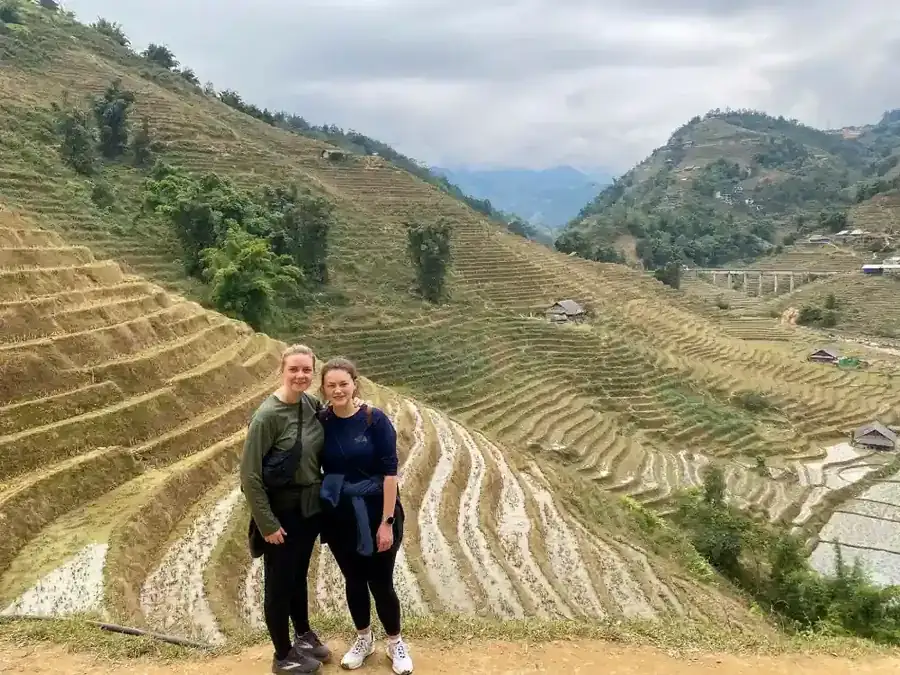
Strong for terrace panoramas (Day 1), forest and waterfall frames around Giang Ta Chai (Day 2), and greener river-valley light at Ban Ho and lower hamlets (Day 3). Three ethnic contexts give varied subject matter across the trip.
You trade some unhurried time at each viewpoint for distance covered — this is a walking product, not a dedicated photo workshop. Mist and rain reduce long-range shots without cancelling village scenes.
Recovery expectations after the trek
Day 3 ends with lunch in Thanh Phu and a car back to Sapa Town the same afternoon — legs are usually tired, not fresh. Plan buffer before a same-evening sleeper bus or flight connection.
Many guests sleep one more night in town after the trek before leaving Sapa. This product does not include a rest day — if you need that, add a hotel night in your own calendar, not inside the trek itinerary.
3-Day Trek vs 2-Day Homestay Trek
Recommend the 3-Day Trek only when three walking days are genuinely available and a deeper valley progression — including Ban Ho Tay country — matters more than finishing in two days.
| 3-Day Sapa Valley & Village Trek | 2-Day Trek & Local Homestay | |
|---|---|---|
| Calendar | 3 walking days · 2 homestay nights | 2 walking days · 1 homestay night |
| Published distance / gain | 32–38 km · ≈1100 m | 22–25 km · ≈650 m |
| Route shape | Muong Hoa → Giang Ta Chai → Ban Ho → Nam Toong / Thanh Phu | Muong Hoa classic → Giang Ta Chai / Su Pan → return |
| Homestays | Giay (Ta Van) then Tay (Ban Ho) | Giay in Ta Van corridor |
| Best for | Three walking days and broadest standard ethnic sample | First homestay trek when two valley days are the limit |
Related planning
Itinerario detallado
Día 1
Sapa → Lao Chai → Ta Van. Alojamiento en casa particular con una familia Giay.
Día 2
Ta Van → Giang Ta Chai → Ban Ho. Alojamiento en casa particular con una familia Tay junto al río.
Día 3
Ban Ho → Nam Toong → Thanh Phu. Almuerzo y traslado de regreso a Sapa.
Qué incluye
- Guía local experimentado de habla inglesa
- Entradas a los pueblos étnicos
- Agua embotellada durante la caminata
- Comidas locales según lo indicado en el itinerario
- 2 noches de alojamiento en casas particulares
No incluido
- Gastos personales y propinas
- Seguro de viaje
- Bebidas no mencionadas en el itinerario
- Transporte desde y hacia Sapa
Recomendaciones de equipaje
Protocolo cultural
- Pregunta siempre antes de fotografiar a los aldeanos
- Vístete con modestia al entrar en las casas
- Quítate los zapatos dentro de las casas tradicionales
- Compra directamente a los artesanos para apoyar a las familias
Su guía local
Dirigido por guías H'mong, Dao o Tay que crecieron en estos senderos. Cada guía habla inglés y conoce a las familias, las estaciones y las rutas tranquilas que la mayoría de los viajeros nunca encuentran.
Preguntas frecuentes
¿Se puede trasladar el equipaje entre los alojamientos?+
Sí, el equipaje principal se queda en Sapa, tú solo haces el trekking con una mochila de día.