Sapa Local Guides · Vietnam · August 2026
Sapa Photography Tours — Where and When to Capture the Best Landscapes
Executive Summary
There is no separate photography-workshop product on this site. Landscape photography in Sapa is path photography on the same private walking days everyone else uses. Colour follows a crop calendar. Cloud can erase a “perfect” week.
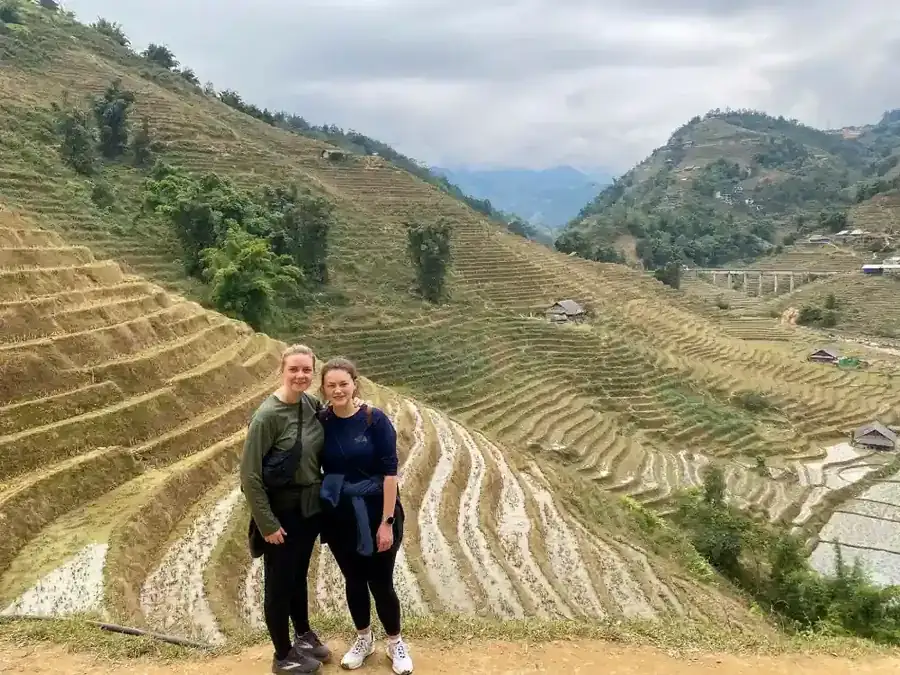
Where the famous frames actually are: walk Muong Hoa Valley — stacked walls above Y Linh Ho and Lao Chai, softer benches at Ta Van. That is the terrace amphitheatre. Cat Cat Village is a ticketed gorge. Ban Ho is a different, lower watershed on multi-day routes. Hub: Sapa Rice Terraces.
Which existing trek: if you want terraces plus forest and waterfall in one walking day, the Full-Day Muong Hoa Valley Trek (~14–16 km to Giang Ta Chai) is the primary match. If you want terrace density and an earlier finish (car from Ta Van), the Easy Muong Hoa Valley Trek (10–12 km) is the secondary match. Neither is a sunrise tour unless you arrange a custom start through Private Sapa Expeditions. Group vehicles rarely wait for light — format: Private vs Group Tours in Sapa. Standard meetings are around 08:30 at Sapa Stone Church.
This page does not name a secret GPS pin, sell a workshop, or guarantee gold in October. Season: Best Time to Visit Sapa. Route choice: Which Sapa Trek Is Right for You.
Best Seasons
Match the month to the picture you actually want. There is no single “best season for photography in Sapa.”
| Priority | Typical Muong Hoa window used across these guides | |----------|---------------------------------------------------| | Golden grain | Late September–October; November mixed | | Green lushness | June–August (rain and cloud) | | Planting water / reflections | April–May (local shift) | | Walking comfort + long views | March–May and September–November | | Mist, wood smoke, little colour | December–February |
October is the busiest photography month, not a private viewing. March–April often give a better crowd-to-weather ratio than peak gold. Extra nights beat one forced sunrise: How Many Days Do You Need in Sapa.
Green Season
Green season is young rice covering the slopes — typically June through August. Emerald intensity is real. So are slick stone, low cloud, and Fansipan wrapped for days.
What works: lush walls, mist drama when it clears, fewer international groups than October, strong waterfall volume toward Giang Ta Chai on the Full-Day.
What does not: reliable ridgelines, dry boots, or a July “clear mountain” brief. Waterproof jacket and camera rain cover are not optional. Green is a crop phase, not a better gold.
Golden Season
Golden season is pre-harvest colour — widely late September through October on upper Muong Hoa, with some benches still gold into November while others are already cut. This is the classic Sapa landscape-photography window.
Clearer mornings return more often than in summer. Paths above Lao Chai and Y Linh Ho are busier at mid-morning. Book private walking days early if dates are fixed.
Colour is not simultaneous across elevations. Ban Ho can sit on a different week than Y Linh Ho. A search result that names one weekend for the whole district overstates the agriculture. Harvest patchwork (gold + stubble + drying racks) is the honest picture, not a failed postcard.
Mist and Cloud Conditions
Town forecasts describe town. Mist can sit on Ta Van while Lao Chai is in sun — or the reverse — in minutes.
Useful mist: soft layers on upper Y Linh Ho paths after a cold night; winter inversions that bury the valley floor while ridges sit above cloud.
Useless mist: the entire amphitheatre grey at the hour you booked. That is common in wet season and winter. Have a village-and-weather story, not only a colour story.
Afternoon build-up happens even in “good” months. Morning is the higher-odds window for long views of the Hoang Lien Mountains. Cloud inversions are dramatic when they happen and not schedulable.
Sunrise Locations
This page does not publish clock times or a named “sunrise terrace viewpoint.”
What actually happens at dawn: valley mist often hides the fields at the hour blogs call golden hour. When it lifts, upper paths between Y Linh Ho and Lao Chai can look across stacked walls. They can equally stay grey.
Getting there at true sunrise means leaving town well before a standard 08:30 meeting — trailhead logistics, cold, still no guarantee. Catalogue Easy and Full-Day walks are not sunrise products. A valley homestay night (for example on the 2-Day Trek & Local Homestay) puts you closer to morning mist; it is still a walking day, not a rooftop café.
Town viewpoints can catch Fansipan or a cloud inversion without a valley descent. That is a mountain-backdrop picture, not “I photographed the rice terraces.”
Winter dawn is cold. Wet-season dawn is often rain. Treat sunrise as a bonus.
Sunset Locations
Sunset, when the sky is actually clear, can warm west-facing Hoang Lien slopes. The Muong Hoa amphitheatre does not automatically face a cinematic sunset. Afternoon cloud is common even in October.
Lingering on muddy terrace paths at dusk is a safety problem. That is why many day treks finish with a vehicle pickup (Ta Van on Easy Trek; Giang Ta Chai on Full-Day) rather than waiting for last light. Safety: Sapa Trekking Safety.
Town cafés and hotel terraces are town sunsets. Do not skip a walking day for that and call it terrace photography.
Fansipan cable-car platforms can be crowded at sunset in stable weather. Tickets and closures are the resort operator’s — Sapa Local Guides does not sell summit photography tours.
Best Villages
“Best places to photograph Sapa” depends which picture you mean.
- •Steep panoramic walls: Y Linh Ho and the paths toward Lao Chai.
- •The classic amphitheatre most people search: Lao Chai.
- •Softer riverside terraces, Giay houses, bamboo: Ta Van.
- •Forest, waterfall, Red Dao country: Giang Ta Chai on the Full-Day — not a bigger terrace stadium.
- •Lower Tay river valley, different watershed: Ban Ho on a three-day walk.
- •Smaller near-town fields: countryside walk (Suoi Ho, Ma Tra).
- •Not the terrace bowl: Cat Cat.
No village here is an empty set. Houses, buffalo, and school paths sit in the frame. Ask before photographing people.
Muong Hoa
Muong Hoa Valley is the river corridor — on the order of fifteen kilometres of inhabited farmland — where most Sapa landscape photographs are made. Black Hmong, Giay, and Red Dao communities farm it.
If the search is “Sapa landscape photography” or “rice terrace photography Sapa,” this is the place. You pay for it in hours on foot, then usually a car uphill. A photography trek in Sapa, in practice, is a Muong Hoa walking day with a camera rain cover — not a separate SKU.
Early light on upper paths; midday harsh on ridges, usable at river-level bamboo; late sidelight above Ta Van when cloud allows. Independent walkers who navigate can do this; a private guide helps with routing around weather and with language when people are in the frame.
Lao Chai
Lao Chai is the large Black Hmong settlement on the central loop. Paths above the village open the layered terraces most people mean by “Sapa rice terraces.” It is a crossroads: more foot traffic than Y Linh Ho, still farmland.
Mid-morning in October is the crowded version of the same walls. An earlier private start changes the picture more than a new lens. Lao Chai is on both Easy and Full-Day products. It is the wrong “secret village” and the right terrace-country village.
Ta Van
Ta Van is the Giay riverside anchor. Terraces are broader and less vertical. Bamboo, gardens, stilt houses, river sound. Easy Trek often finishes here with a vehicle return. Homestays sit in this part of the valley.
If you only want the steep amphitheatre, Ta Van can feel “less terrace.” It is a different terrace type and the cultural shift the valley day actually includes. Late afternoon sidelight across these benches is documented on clear golden-season days — not guaranteed.
Y Linh Ho
Y Linh Ho is often the first Black Hmong village on a descent into Muong Hoa: scattered ridge houses, some of the steepest panoramic walls, quieter as a crossroads than Lao Chai.
For dramatic terrace photography on a first walking day, Y Linh Ho and the paths toward Lao Chai are the usual honest answer — weather permitting. It is a regular opening of the Easy Trek and still on the Full-Day’s valley sequence. Morning mist clearing off these walls is the picture people imagine; it is not a daily schedule.
Ban Ho
Ban Ho is not on the one-day Muong Hoa loop. Lower, warmer Tay riverside country on a southern watershed, typically reached on the 3-Day Sapa Valley & Village Trek. Greener walls, stilt houses, river, fish in the food culture.
Useful if you already have three walking days and want a different landscape vocabulary. The wrong answer to “best places to photograph Sapa rice terraces near town.” Do not treat it as a Lao Chai day-trip substitute. Planting and harvest can sit on a different week than Y Linh Ho.
Fansipan Viewpoints
Fansipan (3,143 m) is a backdrop and a competing half-day, not a terrace lens.
- •From valley ridges: telephoto compression of the peak above layered terraces on clear autumn mornings — still from Muong Hoa paths, not from the summit.
- •From town: the massif when cloud lifts; named Fan Si Pan Road for a reason.
- •From the cable car / summit platforms: panoramas of the Hoang Lien range when visibility exists; cold, queues, wind closures. Sapa Local Guides does not operate Fansipan photography tours. Confirm tickets locally.
Do not spend the only good terrace morning on the cable car if rice walls are why you came. Itinerary conflict: 3 Days in Sapa.
Walking Difficulty
Seeing the terraces at the scale of the photographs is a full walking day.
- •Easy Trek: 10–12 km, ≈300 m, Moderate despite the name. Best terrace-to-kilometre ratio; earlier finish. Secondary product here.
- •Full-Day: 14–16 km, ≈450 m, continues to waterfall and forest. More landscape types, more fatigue with a camera pack. Primary product here.
- •Countryside half-day: smaller near-town fields — not Lao Chai.
- •3-day Ban Ho: consecutive days, different watershed.
- •Remote Expedition: ridges, fewer iconic terraces.
Carrying a body and two lenses on descents is slower than a phone. Wet season increases difficulty more than any brochure gradient. Grip shoes: What to Pack for Sapa.
Independent photography days are viable for hikers who navigate. Private pacing helps when you stop often for light — you are not on a bus timetable. Minimum two paying guests on catalogue products.
Camera Gear Recommendations
No brand list. No workshop kit to rent here.
- •Rain cover and dry bag — mist finds every opening
- •Wide angle for terrace scale
- •Moderate telephoto for compressing walls against Hoang Lien ridges; portraits only with permission
- •Spare batteries warm against the body in winter and on Fansipan
- •Lens cloth; allow glass to acclimatise off the cable car to avoid fog
- •Phone is enough for many travellers; signal is patchy in the valley
- •Tripod: useful at dawn if you are already in place; awkward on narrow busy paths at midday — not required
- •Poles: optional on descents if the pack is heavy
Voltage 220V; Type A/C/F. Do not pack a drone as essential (see below).
Drone Considerations
Rules change. This page does not advise flying where it is restricted or without permission.
Default: do not fly over houses, fields, gorges, or the Fansipan / Hoang Lien National Park infrastructure. Homes sit metres from trail edges; noise and privacy are real. Village consent is not a caption.
Assume permits may be required and that valley communities and the cable-car complex may prohibit flight. Confirm current local regulations before you pack a drone. If you cannot confirm, leave it in the bag.
Do not treat “photography tour” as a licence to launch.
Responsible Photography
Terraces feed families. People are not props.
- •Stay on established paths; do not walk planted or flooded fields for a better angle
- •Ask before photographing anyone — especially elders, children, and altar spaces
- •Accept no
- •Do not pay children to pose; do not treat bracelet-selling as a game
- •Yield to buffalo, school paths, and loads
- •Carry litter out
- •A local guide who speaks the language makes the ask cleaner; it does not replace manners if you walk independently
The same ethic in Lao Chai, Ta Van, Y Linh Ho, Ban Ho, and on Fansipan platforms.
Common Photography Mistakes
Photography trips fail when the calendar, the product, and the light story do not match.
- •Booking October for gold and expecting empty paths — harvest colour and peak crowds arrive together; Best Time to Visit Sapa
- •One calendar day and expecting sunrise terraces plus clear Fansipan — light and summit visibility are separate lotteries; extra nights help: How Many Days Do You Need in Sapa
- •Standard 08:30 Easy Trek as a sunrise product — catalogue valley days are not dawn tours; custom clock: Private Sapa Expeditions
- •Full-Day because Easy sounds too soft — ~14–16 km adds forest and waterfall paths, not a bigger Lao Chai stadium: Easy Trek vs Full-Day Trek in Sapa
- •Town or cable car expecting terrace walls — mountain backdrop is not the Muong Hoa amphitheatre walked
- •Photographing people without asking — especially elders, children, and altar spaces; a guide helps with consent, not permission to skip manners
- •Walking planted or flooded fields for a better angle — terraces are farmland, not a set
- •Drone over villages without confirmed rules — default is do not fly over homes, terraces, or the Fansipan complex
- •No rain cover in green season — June through August can erase long views while village paths still work
When cloud hides the ridgeline, shift to village texture, mist layers, and household life — not only a colour calendar.
Related Planning
- •Season deep-dives: September & October Harvest Season in Sapa · Winter Trekking in Sapa · Wet Season & Fog Season in Sapa
- •Month hub: Best Time to Visit Sapa
- •Trek comparisons: Easy Trek vs Full-Day Trek in Sapa · Which Sapa Trek Is Right for You
- •Terraces and valley: Sapa Rice Terraces · Muong Hoa Valley · Muong Hoa Valley authority
- •Calendars: How Many Days Do You Need in Sapa · 2 Days in Sapa · 3 Days in Sapa
- •Packing: What to Pack for Sapa
Frequently Asked Questions
Are there Sapa photography tours as a separate product?
No workshop SKU on this site. You photograph on the same private Easy or Full-Day valley walks — or independently. Custom early starts exist as private expedition pacing, not a named sunrise product.
What is the best photography tour in Sapa?
Full-Day if you want terraces plus waterfall and forest in one day. Easy Trek if terrace walls and an earlier finish matter more. Neither guarantees light.
Where are the best places to photograph Sapa?
Muong Hoa paths at Y Linh Ho and Lao Chai for the amphitheatre; Ta Van for riverside benches; Giang Ta Chai for waterfall on the Full-Day; town or cable car for Fansipan as a peak, not as terraces.
When is the best season for photography in Sapa?
Late September–October for gold (busy); June–August for green (wet); April–May for planting water; March–May and September–November for clearer walking windows. Winter is mist and atmosphere.
Can I photograph Sapa rice terraces at sunrise?
Sometimes, if mist lifts and you are already on upper paths. Standard 08:30 treks are not sunrise tours. This page does not name a viewpoint or a clock.
What about sunset photography in Sapa?
Possible on clear west-facing slopes and town/Fansipan platforms. The terrace bowl is not a guaranteed sunset amphitheatre. Do not walk out of the valley at dusk on mud to chase last light.
Is a photography trek in Sapa just the Full-Day?
Often, if you want more landscape types. The Easy Trek is the stronger terrace-only day. Bring rain cover either way.
Can I photograph independently?
Yes on town, Cat Cat, and Muong Hoa if you navigate. Homestay overnight without a hosting arrangement is not recommended. Ask before photographing people.
Should I bring a drone?
Only if you have confirmed current local rules and community consent. Default is do not fly over villages, terraces, or the Fansipan complex.
How hard is walking with camera gear?
Easy Trek is still a Moderate 10–12 km day. Full-Day is longer. Mud and descents matter more than the lens.
Does Sapa Local Guides sell a Fansipan photography tour?
No. Cable car tickets are the resort operator’s. Valley treks can include the peak as a backdrop on clear days.
How many days do photographers need?
One walking day is one roll of the weather dice. Extra nights are the real photography upgrade. See the trip-length guide and the 2-day / 3-day itineraries.
Envie de créer votre propre histoire ?
Rejoignez un trek ou un homestay à Sapa et vivez la vraie montagne.
Demander sur WhatsApp