Sapa Local Guides · Vietnam · August 2026
Ta Van Village, Sapa — Giay Community, Homestays & Muong Hoa Valley Guide
Introduction to Ta Van Village
Ta Van is the lower-valley anchor of Muong Hoa Valley — the riverside Giay community where many Sapa treks pause for lunch, finish a day walk, or spend a homestay night before continuing deeper toward Giang Ta Chai or lower watersheds. Where upper villages such as Y Linh Ho and Lao Chai are predominantly Black Hmong terrace country, Ta Van marks a cultural and geographic shift: bamboo groves, greener slopes, stilt-house architecture, and the sound of the Muong Hoa River closer at hand.
Ta Van is not a resort village or a single restaurant strip. It is a living Giay settlement — families farming riverside fields, maintaining footpaths shared with trekkers, and hosting guests in wooden homes under arrangements negotiated through local guides. Understanding Ta Van as a named place within a multi-ethnic valley prevents the common mistake of treating it as an interchangeable stop on a generic "Sapa trek."
The village sits downstream from Lao Chai on the most walked corridor in Sapa — the route that descends from upper Black Hmong terraces into lower Giay farmland. That position makes Ta Van both welcoming and busy: economic opportunity from tourism is real, but so is pressure from foot traffic, photography without permission, and expectations shaped by social media rather than village reality.
For trip-wide planning — transport, seasons, homestays, budget, and how products differ — see The Complete Sapa Travel Guide, Homestay in Sapa — What to Expect, and How Many Days Do You Need in Sapa.
Where Is Ta Van?
Ta Van lies in the lower-middle section of Muong Hoa Valley, downstream from Lao Chai and upstream from routes continuing toward Giang Ta Chai and Ban Ho, at an elevation where steep upper terraces give way to broader riverside slopes. Sapa Town sits on the basin rim to the north and west at roughly 1,500 metres; Ta Van is lower and warmer in feel than Lao Chai Village above.
Geographically, Ta Van occupies the transition zone between upper-valley Black Hmong terrace walls and the greener, water-adjacent landscapes of lower Muong Hoa. On clear days, paths above the village may frame Fansipan and the western Hoang Lien Mountains skyline — though cloud and valley mist hide distant peaks as often as they reveal them.
The village administers within Muong Hoa commune, Sa Pa district, Lao Cai Province. Footpaths connect Ta Van uphill to Lao Chai and Y Linh Ho, downstream toward Giang Ta Chai and forested side valleys, and along the river corridor that defines Muong Hoa's agricultural geography.
Most trekking approaches reach Ta Van on foot after descending from upper trailheads. A road network exists in parts of the valley, and private vehicles often collect guests at Ta Van after day treks — a practical endpoint that avoids climbing back uphill to Sapa on the same day. Homestay guests typically arrive walking and depart by arranged transfer or continue trekking south on multi-day routes.
Giay Community and Multicultural Life
Ta Van is primarily a Giay village — one of the clearest Giay settlement anchors in the Sapa trekking landscape. For full cultural context on language, history, food, festivals, and homestay traditions, read the dedicated Giay people guide. The Giay people are a Tai-language ethnic group distinct from the Hmong and Dao communities upstream, with their own clothing traditions, housing styles, and agricultural rhythms tied to riverside land.
Giay identity in Ta Van expresses through stilt houses, bamboo management, wet rice and vegetable farming on lower slopes, and hospitality customs that emphasise shared meals and tea. Giay dress is generally less commercially visible than Black Hmong indigo textiles or Red Dao embroidery — culture here often reveals itself through architecture, food, and household routine rather than market spectacle.
Multicultural contact defines daily life. Black Hmong neighbours from Lao Chai trade, intermarry, and share market paths. Red Dao communities occupy forested valleys reachable downstream toward Giang Ta Chai. Tay settlements appear in lower river corridors further south. Ta Van is not ethnically isolated — it is a node in a valley network where groups coexist while maintaining distinct languages and customs.
For travellers, the shift from Lao Chai to Ta Van is one of the most instructive cultural transitions on a standard Muong Hoa day — visible in housing, crops, and atmosphere within a few hours of walking downhill.
Landscape and Rice Terraces
Ta Van's landscape combines riverside greenery with rice terraces on surrounding slopes — less vertically dramatic than the stacked walls above Y Linh Ho, but broader, softer, and often photogenic in a different register. Bamboo groves line watercourses; vegetable gardens sit near homes; buffalo work fields where paths widen toward the valley floor.
Rice terraces remain central to livelihood. Giay families maintain embankments, manage irrigation from the Muong Hoa River and tributary channels, and follow monsoon calendars shared across the valley — planting floods, green growth, golden harvest — even where crop mix differs slightly from upper Black Hmong slopes. See Sapa Rice Terraces for the district crop cycle.
Seasonal colour shifts mirror the wider valley: mirror-bright water at planting, emerald green in summer, gold before harvest, quieter fallow or secondary crops in winter. Mist rising from the river at dawn can hide terraces entirely; afternoon sun may burn through cloud to reveal layered slopes toward the Hoang Lien ridgeline.
Terraces here are farmland, not backdrop. Staying on established paths, avoiding shortcutting through planted fields, and respecting irrigation channels protects household income directly — especially in a village as heavily visited as Ta Van.
Traditional Houses and Homestays
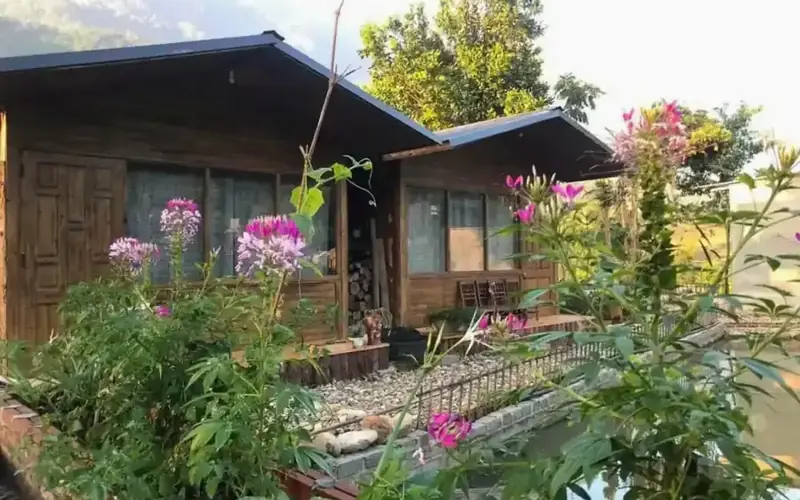
Giay homes in Ta Van often use stilt-house architecture — wooden structures raised above ground on posts, with livestock or storage beneath and living space above. Roofs are typically metal or tile; walls combine timber with woven bamboo panels in older or auxiliary buildings. The stilt form suits riverside humidity, flood risk in wet seasons, and ventilation in warmer lower-valley temperatures.
Homestay accommodation places travellers in working households — simple mattresses, shared blankets, mosquito nets, and bathroom facilities that may be basic by urban standards but reflect genuine family hospitality. The Sapa Local Homestay Experience is hosted by Giay families in this part of the valley under direct arrangements with Sapa Local Guides rather than anonymous booking pools.
The 2-Day Trek & Local Homestay typically spends its overnight in Ta Van or the immediate Giay hamlet network after walking through upper Muong Hoa on day one — a structured introduction to valley trekking plus a homestay night without committing to a three-day expedition.
Homestays are not hotels. Meals arrive when ready; sleeping arrangements follow household capacity; hot water may be limited. Guests who engage conversation through their guide, accept food graciously, and avoid treating family kitchens as photo studios generally receive warmth that transactional tourism cannot replicate.
Custom homestay combinations — extended stays, quieter hamlets, or multi-village routes — can be discussed through Private Sapa Expeditions when standard products do not match your interests.
Farming and Daily Life
Ta Van's economy combines terrace rice cultivation, riverside vegetables, livestock, and tourism-related income from homestays, guiding support, and small-scale vending. Daily rhythm follows agricultural cycles: early field work, animal feeding, school paths active mid-morning, cooking and textile or craft work in afternoons, early nights in quieter seasons.
Water buffalo remain important for ploughing where slopes permit. Pigs and poultry provide protein and market sales. Bamboo is harvested for construction, fencing, and household use — a resource Giay communities manage actively rather than treating as wild scenery.
Tourism intersects this schedule without replacing it. Homestay hosts prepare guest meals around their own family cooking; guides lead groups through while neighbours continue farming. Children walk to school on paths shared with trekkers — a overlap that demands reduced speed and noise near households.
Income distribution is uneven, as in Lao Chai: families on main paths and homestay networks benefit more visibly than households on quiet side ridges. Private tours with local guides who pay homestay hosts directly support more equitable benefit than mass tourism where intermediaries absorb payments.
Local Customs and Culture
Giay hospitality traditions emphasise welcoming guests with tea and food — offers that carry social weight. Accepting or declining politely both matter; ignoring invitations without acknowledgement can cause offence. Shoes often come off at doorways; seating arrangements may follow age and gender customs your guide can explain.
Giay clothing is less uniformly distinctive to outsiders than Black Hmong indigo dress or Red Dao embroidery, but textile and craft traditions persist in households — weaving, basketry, and food preparation methods passed within families. Cultural learning here often happens through shared meals and observation rather than staged performances.
Spiritual life includes ancestor veneration and calendar festivals aligned with agricultural cycles — events generally private unless hosts explicitly invite observation. Photography during rituals or at household altars requires explicit permission.
Market days and town trips connect Ta Van to Sapa's wider economy — Giay vendors sell produce and crafts alongside Black Hmong and Red Dao traders in town markets. That commerce is part of valley multiculturalism, not a separate tourist economy.
Best Seasons to Visit
Ta Van rewards visitors across seasons, with lower elevation producing slightly milder temperatures than upper Muong Hoa villages.
Spring (March–May)
Green terraces and comfortable walking; occasional rain. Clear mornings improve views toward the Hoang Lien skyline and Fansipan massif.
Summer (June–August)
Lush vegetation; wettest months with slick paths and frequent cloud. Riverside atmosphere is vivid; waterproof footwear essential.
Autumn (September–November)
Golden rice and clearer skies — widely considered the finest period for terrace photography and homestay comfort. Cool evenings suit fireside meals in wooden homes.
Winter (November–February)
Quieter trails; cold misty mornings; terraces may lie fallow. Atmospheric for cultural focus rather than panorama hunting.
Valley weather shifts hour by hour. Trust your guide's daily assessment over town-level forecast apps.
Responsible Tourism
Ta Van's position on the popular Lao Chai–Ta Van corridor concentrates tourism impacts — crowding, litter, intrusive photography, and children directed toward bracelet sales on busy paths.
Practices that support Giay communities:
- •Book private tours with local guides; choose homestays where hosts are paid directly
- •Ask permission before photographing people, homes, and meals
- •Stay on established paths; do not enter houses uninvited
- •Buy crafts from makers when possible; avoid aggressive bargaining on handmade work
- •Carry out all litter; do not give candy or money to children on trails
- •Respect homestay simplicity — complaints about basic facilities misunderstand the context
Compare responsible norms with the Lao Chai Village guide for upper-valley Black Hmong context and the Red Dao people guide if continuing toward Giang Ta Chai — expectations differ by community even within one valley day.
Practical Visitor Information
How trekkers typically reach Ta Van
Most visitors walk downhill from Y Linh Ho and Lao Chai on Muong Hoa day routes — a core section of valley trekking products described in the Muong Hoa Valley guide. Day treks often finish at Ta Van with private vehicle transfer uphill to Sapa Town. Overnight guests stay in Giay homestays before continuing south on routes such as the 2-Day Trek & Local Homestay, which may proceed toward Giang Ta Chai on day two.
Sapa Local Guides requires a minimum of two paying travellers on private tours. Meeting point is typically Sapa Stone Church on Fan Si Pan Road before transfer to trailheads.
What to bring for homestays
Sleep clothes, head torch, insect repellent, rain layers, and a modest day pack. A light sleep sheet is optional — bedding is provided on guided homestay routes. Cash supports direct purchases from artisans where card payment is unavailable.
Fitness and timing
Reaching Ta Van from upper trailheads involves sustained descent — moderate fitness suffices with guide support. The climb back to Sapa on foot is long; most day routes avoid it by vehicle pickup from Ta Van.
Continuing beyond Ta Van
Routes downstream connect toward Giang Ta Chai — Red Dao forest country — and eventually lower valleys such as Ban Ho on multi-day itineraries. Ta Van is a gateway as much as a destination: understanding what lies beyond helps you choose between a one-day valley introduction and longer homestay journeys arranged through Private Sapa Expeditions.
Frequently Asked Questions
What is Ta Van known for?
Ta Van is known as a Giay village in lower Muong Hoa Valley — riverside scenery, bamboo groves, stilt houses, homestay hospitality, and its role as the typical endpoint or overnight stop on popular valley trekking routes.
Is Ta Van the same as Muong Hoa Valley?
No. Muong Hoa Valley is the entire river corridor; Ta Van is one village within it — the primary Giay settlement anchor on the most walked trekking loop.
Which ethnic group lives in Ta Van?
Ta Van is predominantly Giay. Upper villages such as Lao Chai and Y Linh Ho are primarily Black Hmong; Red Dao communities appear further downstream toward Giang Ta Chai.
How far is Ta Van from Sapa Town?
Ta Van is reachable on foot within a half-day walk from upper valley trailheads — typically three to five hours depending on route, pace, and stops. Vehicle roads allow pickup from Ta Van back to town without climbing uphill on foot.
Can I stay overnight in Ta Van?
Yes. Giay homestays operate through guided trekking products — including the Sapa Local Homestay Experience and the 2-Day Trek & Local Homestay. Independent overnight stays without guide arrangements are not recommended.
When is the best season to visit?
September through November offers golden rice and clearer skies; March through May provides green terraces with manageable rain. Summer is lush but wet; winter is quiet and misty.
How does Ta Van relate to Fansipan and the Hoang Lien Mountains?
Ta Van sits on the eastern flank of the Hoang Lien massif below Fansipan — lower valley farmland with summit peaks visible on clear days from upper paths. Valley homestays and Fansipan summit visits require separate planning; see the Fansipan guide for peak-specific information.
Does Sapa Local Guides operate in Ta Van?
Yes. Ta Van is central to homestay experiences and appears on Muong Hoa trekking routes throughout the Complete Sapa Travel Guide product overview — as a lunch stop, day-trek endpoint, or overnight Giay homestay depending on the route.
Ta Van endures because Giay families continue farming, raising children, and opening homes along a valley that tourism did not create — only joined. Walk through with that understanding, and the bamboo, river sound, and stilt-house lights at dusk become part of a place worth knowing by name.
Season planning: Best Time to Visit Sapa · September & October Harvest Season in Sapa · Wet Season & Fog Season in Sapa. Valley authority: Muong Hoa Valley.
Compare bookable routes: Ta Van tours.
Envie de créer votre propre histoire ?
Rejoignez un trek ou un homestay à Sapa et vivez la vraie montagne.
Demander sur WhatsApp