À propos de ce trek
Nous suivons des sentiers que nos guides ont parcourus depuis l'enfance — passant par des hameaux où les enfants saluent encore depuis l'entrée et où il n'y a pas de stands de souvenirs. Une randonnée pour les voyageurs qui veulent le vrai Sapa.
Points forts du trek
Choose this trek if…
- You genuinely want quieter, off-loop Hmong hamlets — not the Lao Chai–Ta Van corridor you see on most day treks.
- You have two walking days and accept a remote Black Hmong homestay with simpler facilities than a town hotel.
- You can handle Moderate walking with slightly more vertical work (20–24 km, ≈700 m gain) on narrower forest and ridge paths.
- Fewer other trek groups matters more to you than the most iconic terrace amphitheatre photos.
- Your party meets the minimum two paying guests and is self-sufficient after rain or mist.
Do not choose this trek if…
- This is your first Sapa trek and you mainly want classic Muong Hoa terraces — book Easy Trek or the standard 2-Day Homestay Trek instead.
- You want Giang Ta Chai waterfall or the main valley sequence — this route deliberately avoids that loop.
- You need Red Dao or Ta Phin country — this is Black Hmong off-loop geography, not the Ta Phin corridor.
- You require ensuite bathrooms, hot showers, or hotel-level privacy every night.
- Young children, limited mobility, or travellers who dislike remote access and basic homestays should not book this route.
- You are price-shopping the cheapest two-day trek — the standard 2-Day product covers the famous valley for less.
How this differs from the standard 2-Day Homestay Trek
Both are private 2 Days / 1 Night Moderate treks with one homestay night. The standard 2-Day walks the known Muong Hoa shape — Lao Chai and Ta Van on Day 1, Giang Ta Chai and Su Pan on Day 2 — with a Giay homestay in the Ta Van corridor.
Hidden Villages skips that busy loop. Day 1 starts with a road transfer toward quieter valleys beyond Nam Sai, then walks pine forest, ridge lines, and small Hmong hamlets rarely visited on catalogue day treks. The homestay is with a remote Black Hmong family — not a Giay house in Ta Van.
Why this trek costs more
Published from-price is higher than the standard 2-Day Homestay Trek because the operation is different — not because the name sounds “premium.”
- Scenic mountain transfer (~40 minutes) to a remote trailhead outside the main valley loop.
- Off-loop routing and host coordination in hamlets that see far fewer tourists.
- Picnic lunch by a stream on Day 1 instead of a valley restaurant stop on the standard route.
- Remote Black Hmong homestay logistics — simpler infrastructure, more distance from town support.
- Slightly higher published elevation gain (≈700 m vs ≈650 m on the standard 2-Day).
Remoteness and quieter-village expectations
Expect fewer souvenir stalls, fewer other trekking groups, and hamlets where daily life continues without a performance schedule. Your guide’s FAQ states other tourists are very rare on this route by design.
That quiet comes with trade-offs: less iconic terrace density on Day 1, more forest and ridge walking, and a homestay farther from Sapa Town if something needs adjusting overnight.
Walking difficulty and realistic fitness
Published facts: 20–24 km over two days, ≈700 m cumulative gain, graded Moderate — similar distance band to the standard 2-Day but with more vertical emphasis and narrower paths.
Do not book because the title sounds gentler than “2-Day.” You still walk both mornings. Normal multi-day walking fitness is enough; this is not a shortcut version of the valley trek.
Trail and weather limitations
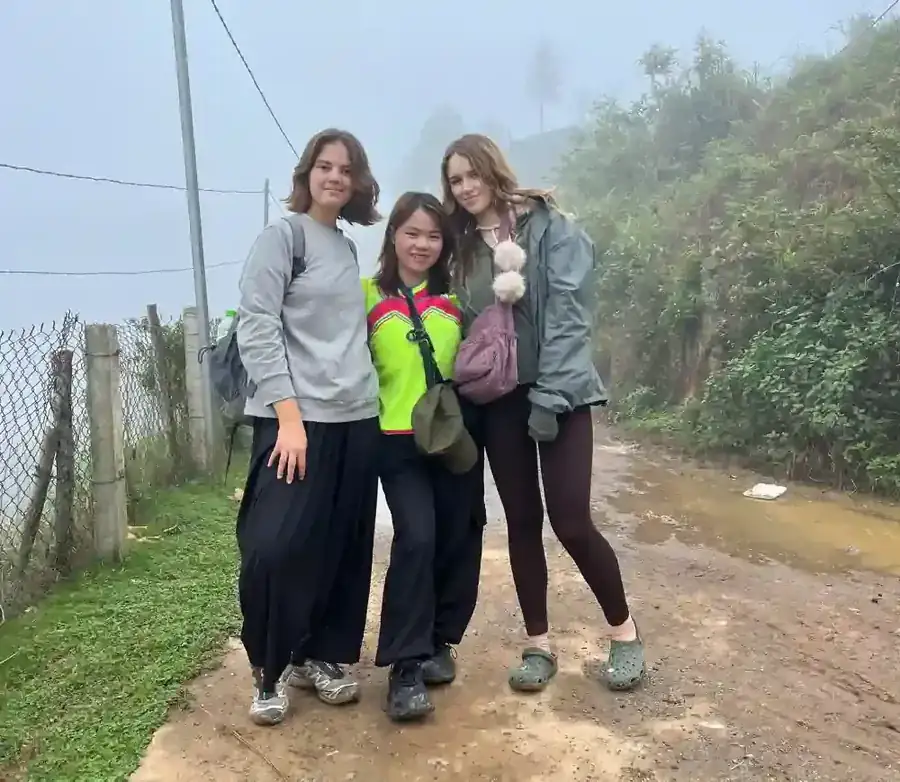
Forest and ridge sections get muddy in wet season (June–August). Pine-shaded paths and stream-side lunch stops need grip and a rain layer — headlamp is listed on this product’s packing list for a reason.
Mist and cold (December–February) reduce views on ridge lines without cancelling the walk. Guides adjust pace within safety limits but cannot turn this into a dry valley loop on a wet day.
Transport and access
Day 1 includes a private vehicle transfer from Sapa Town toward a trailhead beyond Nam Sai before walking starts — not a walk-out from the Stone Church like the standard Muong Hoa 2-Day.
Day 2 finishes with a final village lunch and a car back to Sapa Town. Transport from Hanoi remains your arrangement; this product covers valley transfers as listed on the itinerary.
Homestay comfort, bathroom and sleeping
One night in a remote Black Hmong home — shared platform sleeping with mattresses, mosquito nets, and warm blankets as on other homestay treks. Private rooms may be possible on request; ask when you enquire.
Bathroom is typically shared or in an outbuilding — squat toilet and basic shower are normal. Hot water may be limited. This is farther from town backup than a Ta Van corridor homestay.
Luggage guidance
Daypack only for both walking days and the homestay night — rain gear, grip shoes, refillable bottle, cash in small notes, toiletries, warm layer. Leave bulk luggage at your Sapa hotel.
Pack a headlamp or small torch as this product recommends — useful for village paths and shared bathroom access after dark.
Family suitability
Self-sufficient families with prepared school-age children who already walk long days on uneven trails can manage on dry weather. Remote access and basic homestay facilities are harder than the standard 2-Day valley route.
Not recommended for toddlers, pushchairs, or families who need hotel bathrooms mid-trip. Softer village nights without two trek days: Family Homestay — a different product.
Older-traveller suitability
Fit older walkers who regularly hike multi-day routes and accept squat toilets, platform sleeping, and remote homestays can manage with honest pacing.
If you want culture without two trek days or remote nights, Town Walk or Family Homestay is usually the better match — not this route because you have time.
Photography and culture suitability
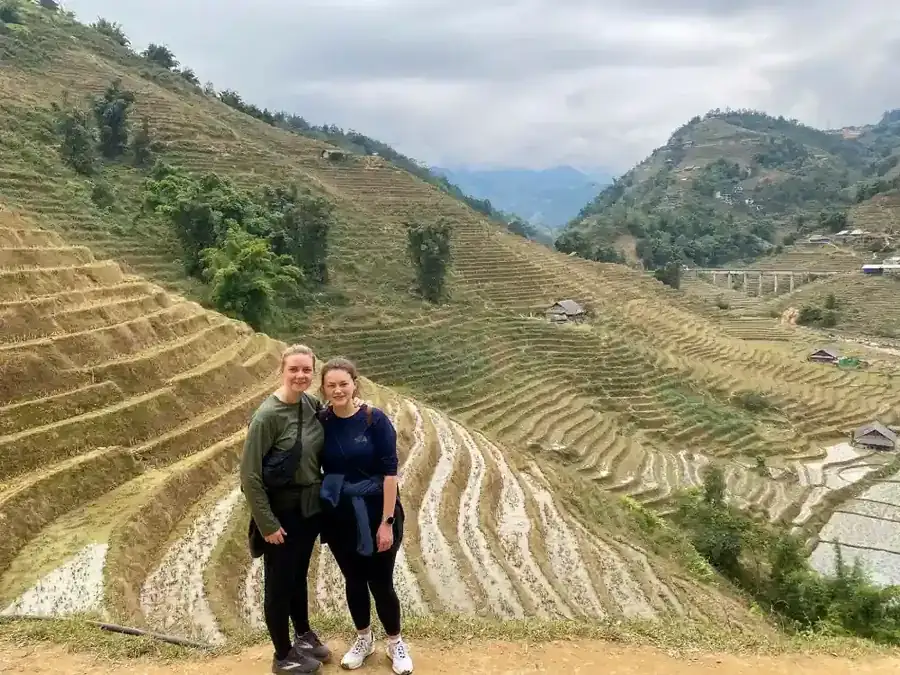
Strong for authentic village life, forest light, ridge panoramas, and Black Hmong household scenes — not for the postcard Lao Chai terrace wall on Day 1.
Culture here is Hmong highland farming and home life, not Red Dao textile tourism. For Ta Phin and Red Dao context, read the place page — this trek does not visit
What this trek is NOT
- Not the standard Muong Hoa 2-Day loop — Lao Chai, Ta Van, and Giang Ta Chai are the other product.
- Not a Ta Phin or Red Dao village tour — Hmong off-loop geography only.
- Not the cheapest two-day trek — the standard 2-Day Homestay Trek is the valley classic at a lower published from-price.
- Not a hotel homestay or join-in group — private party, minimum two paying guests, village simplicity.
- Not Easy Trek with an extra night — two real walking days on remote paths.
Hidden Villages Trek vs 2-Day Homestay Trek
Recommend Hidden Villages only when quieter, remoter Hmong hamlets matter more than the famous terrace corridor. Otherwise book the standard 2-Day.
| Hidden Villages Trek | 2-Day Trek & Local Homestay | |
|---|---|---|
| Corridor | Off-loop Hmong hamlets; avoids Lao Chai–Ta Van concentration | Muong Hoa classic — Lao Chai, Ta Van, then Giang Ta Chai / Su Pan |
| Homestay | Remote Black Hmong family home | Giay homestay in the Ta Van corridor |
| Access | Road transfer to remote trailhead on Day 1 | Walk-out from town into the main valley |
| Published distance / gain | 20–24 km · ≈700 m | 22–25 km · ≈650 m |
| Best for | Return visitors and quiet-path priority | First homestay trek in the famous valley |
Related planning
Itinéraire détaillé
Jour 1 · 8:30
Trajet de 40 minutes de Sapa vers un sentier de randonnée tranquille au-dessus de Nam Sai.
Jour 1 · 9:30
Randonnée à travers une forêt de pins vers des hameaux H'mong cachés.
Jour 1 · 13:00
Pique-nique au bord d'un ruisseau de montagne.
Jour 1 · 16:30
Arrivée à un hébergement chez l'habitant éloigné; aide à la préparation du dîner.
Jour 2 · 8:30
Randonnée à travers les bambous et les rizières en terrasses.
Jour 2 · 13:30
Déjeuner et retour à Sapa.
Ce qui est inclus
- Guide local expérimenté parlant anglais
- Frais d'entrée dans les villages ethniques
- Bouteille d'eau pendant la randonnée
- Repas locaux comme indiqué dans l'itinéraire
- 1 nuit en homestay authentique
Non inclus
- Dépenses personnelles et pourboires
- Assurance voyage
- Boissons non mentionnées dans l'itinéraire
- Transport vers et depuis Sapa
Recommandations d'emballage
Étiquette culturelle
- Demandez toujours avant de photographier les villageois
- Habillez-vous modestement en entrant dans les maisons
- Enlevez vos chaussures à l'intérieur des maisons traditionnelles
- Achetez directement auprès des artisans pour soutenir les familles
Votre guide local
Guidé par des guides H'mong, Dao ou Tay ayant grandi sur ces sentiers. Chaque guide parle anglais et connaît les familles, les saisons et les chemins tranquilles que la plupart des voyageurs ne trouvent jamais.
Foire aux questions
Y aura-t-il d'autres touristes?+
Très rarement — cet itinéraire est conçu pour éviter la boucle populaire Lao Chai / Ta Van.