Über diesen Trek
Für erfahrene Trekker, die die wilde Seite von Sapa erleben wollen. Höhere Pässe, längere Tage und Gastfamilien in winzigen Weilern, wo Sie vielleicht die einzigen Reisenden im ganzen Monat sein werden.
Trek-Höhepunkte
Choose this trek if…
- You specifically want remote ridges and hamlets near Sin Chai — not the main Muong Hoa terrace loop.
- You have completed multi-day walks before and can handle Challenging days with published load (38–44 km, ≈1500 m gain over three days).
- Longer walking days (typically 6–8 hours) on forest paths, ridge lines, and river crossings fit your pace — not a deal-breaker.
- Two consecutive nights in remote Hmong then Red Dao homestays — with simpler facilities — match what you are looking for.
- Your party meets the minimum two paying guests and values fewer other trek groups over iconic terrace density.
Do not choose this trek if…
- This is your first Sapa trek — book Easy Trek, Full-Day, or the 2-Day Homestay Trek instead.
- You want the broadest ethnic sample through Ban Ho — the 3-Day Sapa Valley & Village Trek covers Muong Hoa and lower Tay country at Moderate grade.
- You want quieter Hmong hamlets without ridge days — Hidden Villages Homestay Trek is a two-day off-loop alternative.
- You need hotel bathrooms, ensuite privacy, or guaranteed hot showers every night.
- Young children, limited mobility, or travellers who dislike steep, muddy, or exposed paths should not book this route.
- You are comparing catalogue treks by lowest price — the 3-Day product is the Moderate three-day option at a lower published from-price.
This is not suitable for most first-time visitors
First visits to Sapa usually need one Moderate valley day or a two-day homestay on known paths — not ridge walking near the Hoang Lien range on day one. This route assumes you already know what multi-day village trekking feels like.
If your goal is classic Lao Chai terraces, Ta Van, or a first homestay night, other catalogue products deliver that with less elevation and clearer footing. Book this only when remote country is the point — not when you are unsure which trek to start with.
Required fitness and previous hiking experience
Published grade: Challenging — the only Challenging trek in the standard catalogue. Good general fitness and prior multi-day trekking experience are recommended; this is not a step up from Easy Trek by name alone.
Expect roughly 6–8 hours of walking on typical days, with climbs toward passes above 1700 m on ridge sections. You should already know how your knees and pacing behave on day three of a multi-day walk.
Typical daily walking expectations
- Day 1: Sapa Town toward Sin Chai on the edge of the Hoang Lien range — forest paths, terraces, and climbing toward a mountain pass before a remote Black Hmong homestay.
- Day 2: Long ridge walking between isolated hamlets — among the quietest sections in the catalogue — ending at a small Red Dao village with a traditional herbal bath listed on this product.
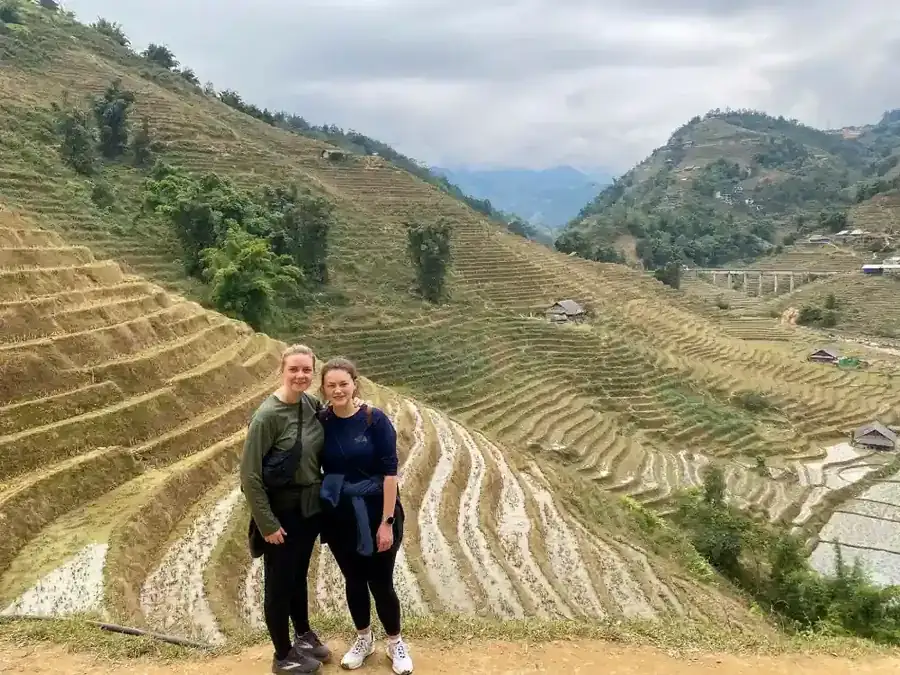
- Day 3: Descent through rice terraces, streams, and farming communities; local lunch, then vehicle back to Sapa Town the same afternoon.
Published total: 38–44 km over three days, ≈1500 m cumulative gain. Days are longer and more vertical than the Moderate 3-Day trek — uneven distribution, with ridge work concentrated on Days 1 and 2.
Terrain and remoteness
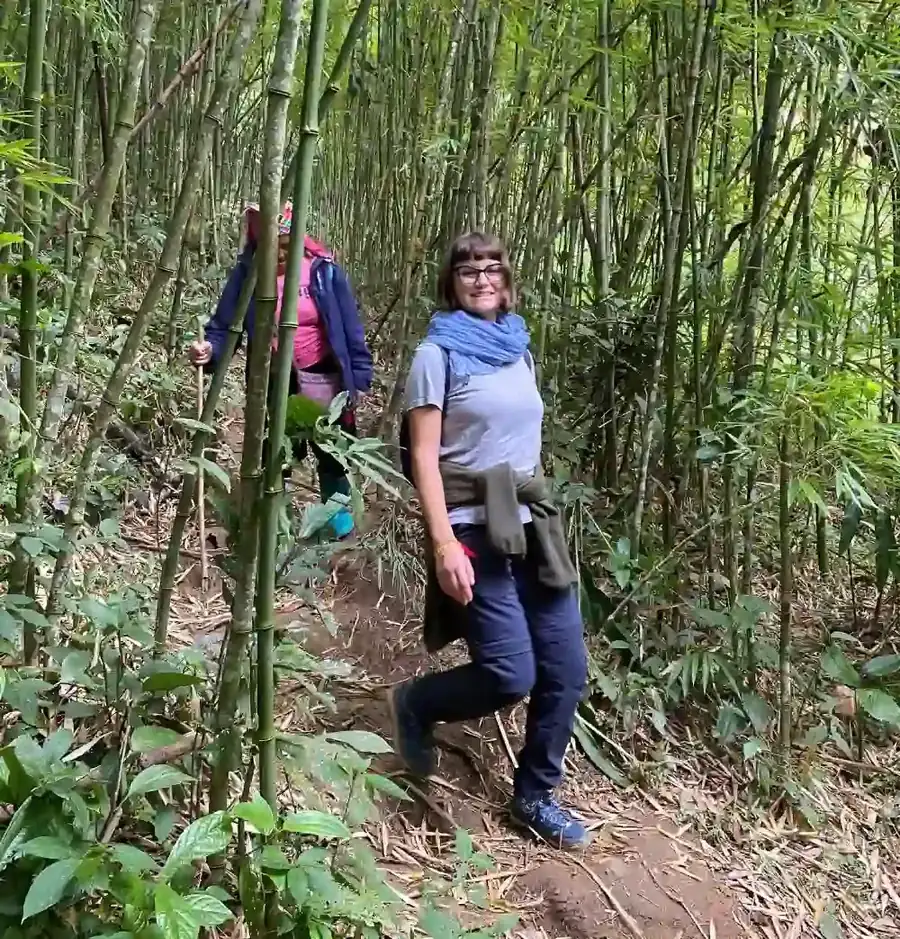
Ridge lines, forest paths, bamboo bridges, and river crossings replace the main Muong Hoa corridor. Sin Chai and remote Red Dao hamlets see far fewer trek groups than Lao Chai or Ta Van.
Remoteness means slower support from town, simpler homestay infrastructure, and fewer fallback options if weather closes a section. That quiet is the product — not a shorter version of the valley trek with a different name.
Weather dependency
Ridge sections are more exposed to mist, wind, and rain than terrace corridors. Cloud can remove long-range views without stopping the walk; cold evenings at higher homestays need a warm layer.
Guides adjust pace and routing within safety limits. They cannot turn a Challenging ridge day into a dry valley stroll when conditions deteriorate — plan clothing and calendar buffer accordingly.
Trail-condition variability
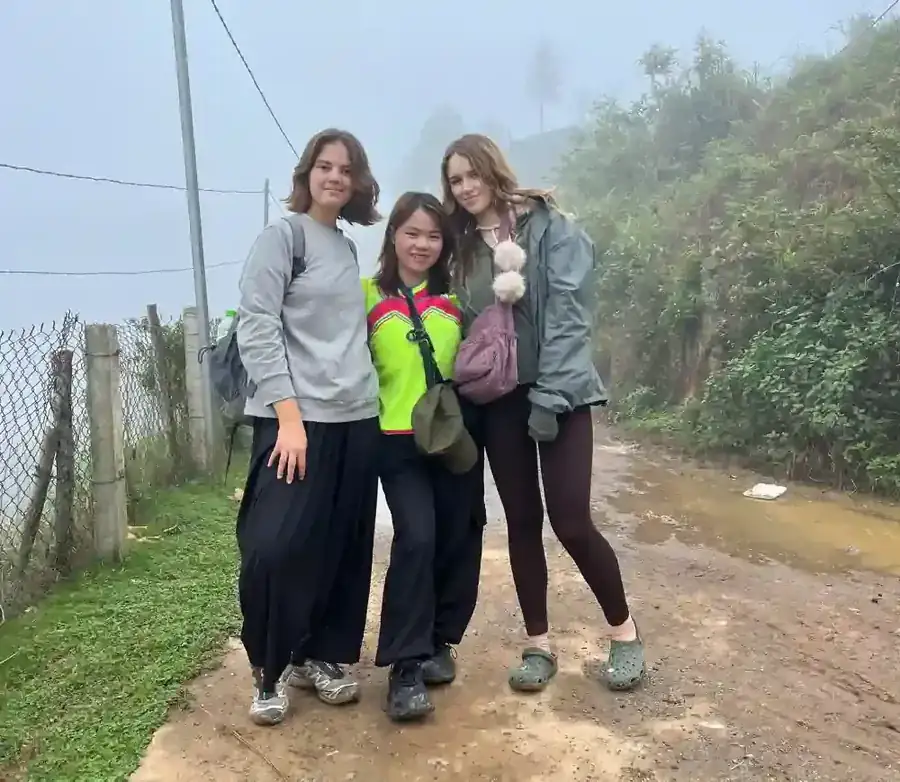
Mud, slick roots, and steep steps are normal after rain — especially on forest and ridge approaches. Trekking poles are strongly recommended on this product’s packing list for a reason.
Trail maintenance varies in remote hamlets. Footing is less predictable than on the busiest Muong Hoa paths; wet-season travel adds time and effort beyond the published kilometre count.
Limited facilities
Two nights in remote village homes — fewer shops, no town backup, and basic homestay services only. Phone signal and electricity can be intermittent compared with Ta Van corridor homestays.
Meals are village food cooked by host families. Medical or comfort issues that would be a minor inconvenience in town become harder to resolve overnight on a ridge route.
Homestay expectations
Night 1: remote Black Hmong homestay after the Sin Chai pass approach. Night 2: Red Dao village with traditional herbal bath included as listed — household practice, not a commercial spa.
Shared platform sleeping with mattresses, mosquito nets, and warm blankets as on other homestay treks. Private rooms may be possible on request; ask when you enquire. Both nights are farther from Sapa Town than standard valley homestays.
Bathroom expectations
Remote homestays use village-standard shared or outbuilding bathrooms — squat toilet and basic shower are common. Hot water may be limited or bucket-heated; the Red Dao night may differ from the Hmong night.
Two consecutive remote nights with shared facilities is harder than one valley homestay on the 2-Day trek. If ensuite bathrooms are non-negotiable, stay in town and book a one-day trek instead.
Luggage guidance
Walk with a daypack only for all three days and both homestay nights — leave bulk luggage at your Sapa hotel, as on other multi-day valley products.
Pack rain layer, grip shoes, trekking poles, warm fleece for evenings, refillable bottle, cash in small notes, toiletries, and headlamp. Quick-dry clothing matters more here than on terrace-only routes.
Seasonal suitability
March–May and September–November usually give the most reliable footing and clearest ridge views. June–August brings green scenery and frequent mud on forest and river sections.
December–February adds cold nights at homestays and higher chance of mist on exposed ridges. This route is a poor fit for wet-season first visits — experienced walkers only when trails are slick.
Safety expectations
Your guide leads private parties on routes they know; ridge and river sections are assessed daily. This is village trekking with Challenging terrain — not a rope-assisted climb, but also not a guided town walk.
Tell us honestly about fitness, injuries, and prior multi-day experience when you book. Guides can slow pace within limits; they cannot shorten published ridge days into Moderate valley distances.
Photography opportunities
Strong for remote panoramas toward the Hoang Lien massif, ridge sky, and authentic Hmong and Red Dao household scenes — less for dense Lao Chai terrace colour on Day 1.
Long walking hours and weather exposure mean less time at each viewpoint than on shorter catalogue days. Mist and rain can remove long-range shots without cancelling village detail.
Why this costs more than the 3-Day Trek
Published from-price is higher than the Moderate 3-Day Sapa Valley & Village Trek because the operation is different — not because the word “Expedition” sounds more premium.
- Challenging grade with longer typical walking days (6–8 hours) and more published distance (38–44 km vs 32–38 km).
- Higher cumulative elevation (≈1500 m vs ≈1100 m) including passes above 1700 m on ridge sections.
- Remote Sin Chai and ridge routing — not the Muong Hoa → Ban Ho corridor with town-adjacent logistics.
- Two remote homestay nights (Hmong then Red Dao) plus traditional Red Dao herbal bath included on this product.
- River crossings, bamboo bridges, and low-traffic paths that require more guide time and host coordination.
Remote Expedition vs 3-Day Sapa Trek
Recommend this expedition only when you specifically want remote villages, longer walking days, and a less-visited route — and already have multi-day trekking experience. Otherwise book the 3-Day Valley trek or a shorter product.
| Remote Sapa Trekking Expedition | 3-Day Sapa Valley & Village Trek | |
|---|---|---|
| Grade | Challenging — only Challenging catalogue trek | Moderate — cumulative but spread across valley paths |
| Published distance / gain | 38–44 km · ≈1500 m | 32–38 km · ≈1100 m |
| Route character | Sin Chai ridges, remote Red Dao hamlets, river crossings | Muong Hoa → Giang Ta Chai → Ban Ho → Nam Toong / Thanh Phu |
| Typical day length | 6–8 hours walking | Moderate full days without published 6–8 hour band |
| Homestays | Remote Hmong then Red Dao (herbal bath included) | Giay Ta Van then Tay Ban Ho |
| Best for | Experienced walkers seeking quiet ridges | Three walking days and broadest standard ethnic sample |
Related planning
Detaillierter Reiseplan
Tag 1
Sapa → Sin Chai → hoher Pass → abgelegene Übernachtung bei einer H'mong-Familie.
Tag 2
Lange Gratwanderung zu einem Weiler der Roten Dao. Abends Kräuterbad.
Tag 3
Abstieg durch Reisterrassen, Mittagessen und Rückkehr nach Sapa.
Was ist inbegriffen
- Erfahrener englischsprachiger lokaler Guide
- Eintrittsgebühren zu ethnischen Dörfern
- Flaschenwasser während des Treks
- Lokale Mahlzeiten wie im Reiseplan aufgeführt
- 2 Übernachtungen im Homestay
- Traditionelles Kräuterbad der Roten Dao
Nicht inbegriffen
- Persönliche Ausgaben und Trinkgelder
- Reiseversicherung
- Getränke, die nicht im Reiseplan erwähnt sind
- Transport nach und von Sapa
Packempfehlungen
Kulturelle Etikette
- Fragen Sie immer, bevor Sie Dorfbewohner fotografieren
- Kleiden Sie sich bescheiden beim Betreten von Häusern
- Ziehen Sie die Schuhe in traditionellen Häusern aus
- Kaufen Sie direkt bei Handwerkern, um Familien zu unterstützen
Ihr lokaler Reiseführer
Geführt von H'mong-, Dao- oder Tay-Führern, die auf diesen Wegen aufgewachsen sind. Jeder Führer spricht Englisch und kennt die Familien, die Jahreszeiten und die ruhigen Routen, die die meisten Reisenden nie finden.
Häufig gestellte Fragen
Wie fit muss ich sein?+
Gute allgemeine Fitness und frühere mehrtägige Trekking-Erfahrung werden empfohlen. Rechnen Sie mit 6–8 Stunden Gehzeit pro Tag.